Studio Monitor Reviews
Dynaudio Core 59 vs ATC SCM25A Pro Mk2 vs SCM45A Pro
Manufacturer: Dynaudio
In this article
- Price and system cost
- Three very different engineering approaches
- Dynaudio Core 59: exciting, extended and tremendously dynamic
- SCM25A Pro Mk2: a breath of fresh air
- Enter the SCM45A Pro
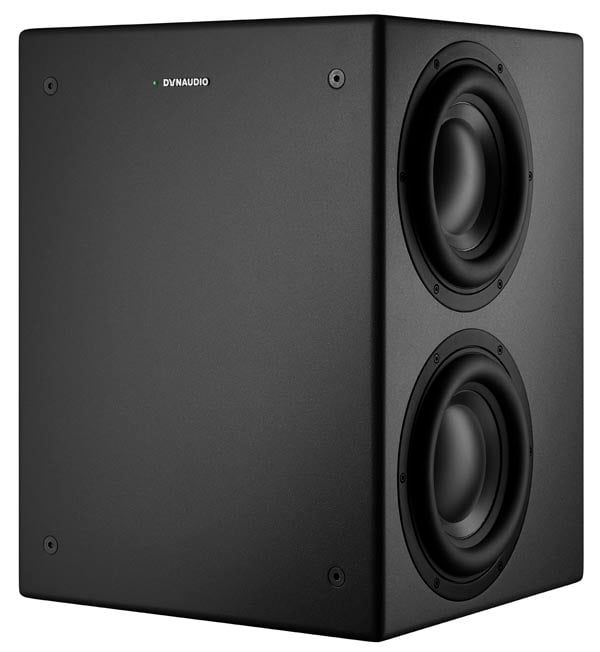
- Adding the Core Sub
- Where the Core 59 ended up
- Where the SCM25A Mk2 ended up
- Three excellent monitors, three different jobs
I auditioned the Dynaudio Core 59, ATC SCM25A Pro Mk2 and ATC SCM45A Pro in the same main room, on the same API 2448 console, using material I know extremely well. That included tracks recorded in-house, legacy recordings, finished mixes of our own and commercial stereo releases. The point was not to find the monitor with the most impressive specification. It was to find the pair I trusted most as the primary reference.
All three turned out to be excellent monitors. They just excel at different things.
Price and system cost
There is also a meaningful price spread. Current U.S. street pricing is about $6,300 per pair for the Dynaudio Core 59 ($3,150 each), $9,990 per pair for the ATC SCM25A Pro Mk2, and $13,990 per pair for the ATC SCM45A Pro. The full-size Dynaudio Core Sub is about $3,999 each, so a stereo pair of Core Subs adds roughly $7,998 to the system.
Those numbers matter because the 45A is not a small step up from the 25A, and adding a pair of Core Subs turns any of these into a very serious monitoring investment. Prices are current as of October 2026 and will of course move over time.
Three very different engineering approaches
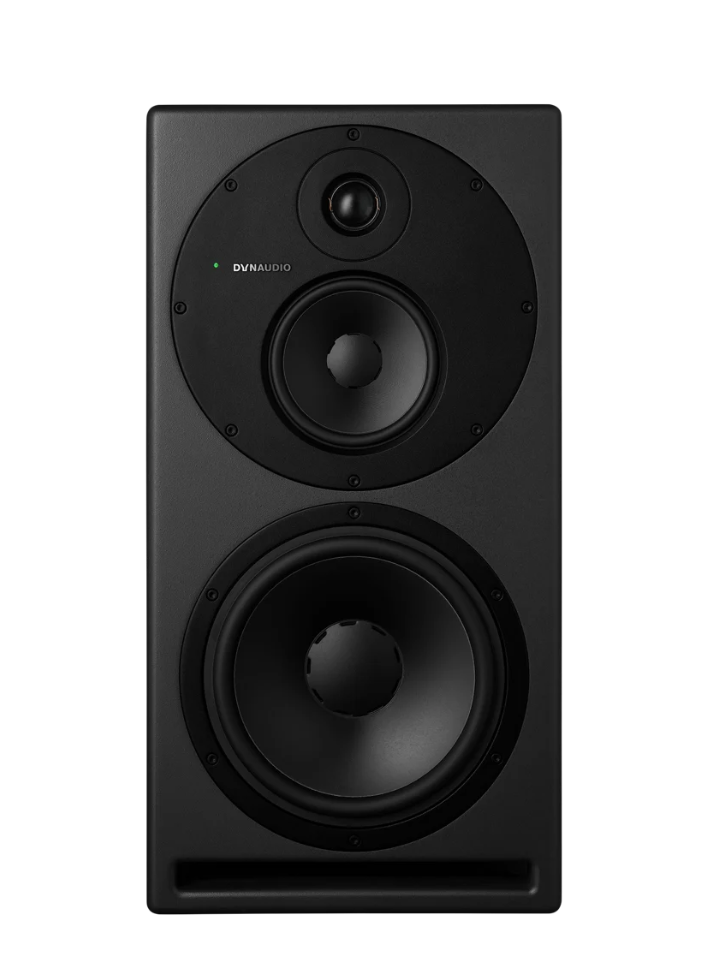
The listening differences are easier to understand when you look at how differently these monitors are built. The Core 59 is a front-ported three-way design with a 9-inch woofer, 5-inch midrange and 1-inch tweeter. Each driver has its own Pascal Class-D amplifier: 500 W for the woofer, 500 W for the midrange and 150 W for the tweeter. The crossover and voicing are handled in DSP, and the speaker accepts both analog and AES3 digital input.
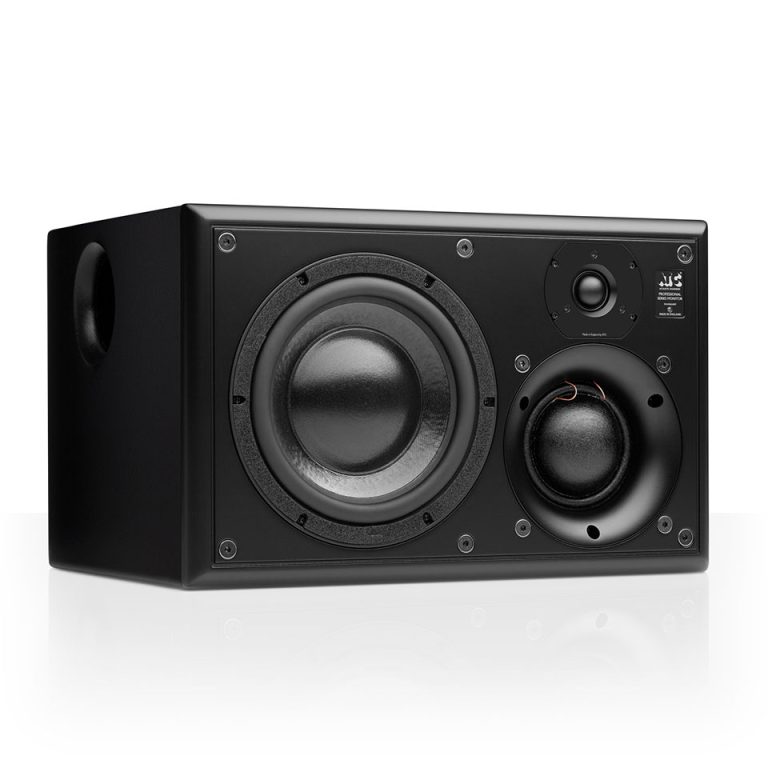
The ATCs take a much more traditional analog approach. The SCM25A Pro Mk2 uses a single 6.5-inch bass driver, ATC’s 3-inch soft-dome midrange and SH25-76S dual-suspension tweeter, driven by a discrete grounded-source MOSFET Class A/B amplifier pack rated at 150 W, 60 W and 32 W respectively. Its crossover is a fourth-order Linkwitz-Riley analog network with phase compensation.
The SCM45A Pro uses the same basic ATC philosophy but scales the bass section up to two 6.5-inch drivers around the same 3-inch soft-dome midrange and dual-suspension tweeter architecture. Its discrete Class A/B tri-amp provides 150 W to the bass section, 60 W to the midrange and 25 W to the tweeter. In other words, the Dynaudio leans on DSP, very high Class-D power and a large single woofer, while the ATCs rely on discrete analog Class A/B amplification, ATC’s soft-dome midrange and comparatively simple analog signal paths.
Dynaudio Core 59: exciting, extended and tremendously dynamic
The Core 59 impressed immediately. It is tremendously dynamic, very extended and capable of producing a low-frequency presentation that is difficult not to notice. On electronic material in particular, there is a sense of power and confidence that makes the speaker exciting to listen to.
But fairly quickly I realized that it was not giving me the soundstage I was looking for. The presentation was exciting, yet somehow off-putting to me. That is difficult to reduce to a conventional measurement or specification, but it became obvious after enough familiar material that the Core 59 was not going to remain in the pride-of-place position on the console.
That does not make it a bad monitor. Quite the opposite. It simply was not the presentation I wanted as my main reference.
SCM25A Pro Mk2: a breath of fresh air
Next came the ATC SCM25A Pro Mk2, and the change was immediate. They were genuinely a breath of fresh air.
Reverb trails and minute room artifacts suddenly became obvious. Small spatial cues that had been easy to overlook were simply there, but without any sense of strain or hyped detail. The monitors were revealing without sounding as though they were trying to prove how revealing they were.
More important, song after song simply sounded like music. The presentation changed drastically from track to track, reflecting the recording chain, studio, instruments, production choices and mixing style of each piece. That variability is something I value in a monitor. I do not want every recording to be stamped with the same loudspeaker personality.
The SCM25A Mk2 was doing exactly what I wanted in the midrange and spatial presentation. The one reservation was low-frequency authority. It was not a serious shortcoming, but on some material there was a sense that the final degree of weight and physical scale was missing. The Core 59 had already demonstrated just how impressive that part of the spectrum could be.
Enter the SCM45A Pro
The SCM45A Pro combined the best of both worlds.
It retained the qualities that had made the SCM25A Mk2 so compelling to me: the openness, the soundstage, the easy recovery of reverberation and room information, and the way different recordings sounded distinctly like themselves. But it added the low-frequency authority, physical scale and dynamic confidence I had admired in the Core 59.
That combination made the choice for the main room straightforward. The SCM45A became the primary monitor on the API console.
Adding the Core Sub
Because my sanity can rightfully be questioned, I then decided to pair the SCM45A with the Dynaudio Core Subs I had originally purchased with the Core 59s.
With a full Dynaudio Core system, the integration is straightforward because the speakers are designed to operate together and the available settings anticipate that use. Pairing the Core Sub with the ATC SCM45A is different. There is no predefined combination and no single setting that makes the two systems fall into place automatically.
Fortunately, the Core Sub is very well controlled and its interface is logical. It is a sealed design using four 9-inch MSP+ Hybrid Drive woofers and 1,000 W of Pascal Class-D amplification, with the same Core-family DSP platform used for placement and system integration. After some experimentation, measurement and, of course, listening, I was able to integrate the subs almost perfectly with the SCM45A. The result gives me the presentation I wanted from the ATCs with the additional low-frequency extension and authority of the Core Subs.
That pairing is not a factory-recommended ATC/Dynaudio system. It is simply what worked in our room after careful setup.
Where the Core 59 ended up
The Core 59s found a role that actually suits their strengths extremely well: the synth and drum-machine rig.
That system can generate very serious low-frequency energy. The MPC Live 2 and the Behringer System 55 modular, in particular, can produce material that makes me appreciate the Core 59’s combination of extension, dynamics and sheer robustness. In that context, I do not worry about asking too much of the speakers.
The qualities that did not make the Core 59 my preferred main reference monitor are much less important in that application, while its strengths become extremely useful.
Where the SCM25A Mk2 ended up
The SCM25A Pro Mk2 moved into our B-room facility, which is a much smaller space. I could not be happier with them there.
In that room, the SCM25A’s scale is entirely appropriate, and the qualities that impressed me during the original audition remain intact: exceptional midrange information, excellent spatial detail and a presentation that lets the character of individual recordings come through clearly.
Three excellent monitors, three different jobs
The conclusion is not that one of these monitors is excellent and the others are not. All three are excellent. They simply serve different purposes in our studio.
- Dynaudio Core 59: tremendous dynamics, deep extension and a powerful low-frequency presentation. In our studio it excels with the synth and drum-machine rig.
- ATC SCM25A Pro Mk2: exceptional midrange clarity, soundstage and low-level spatial information, with a scale that works beautifully in our smaller B room.
- ATC SCM45A Pro: the monitor that, for me, combines the ATC presentation I preferred with the greater low-frequency authority and scale I wanted in the main room.
If I were choosing purely from a specification sheet, I might have reached a different conclusion. Listening to all three in the same room with familiar material made the distinctions much clearer.