Mixing Console Reviews
API 2448 Review: Built for the Long Haul
The API 2448 feels built to last a lifetime. It is remarkably heavy for its size, and the quality of the controls and other touch points inspires admiration. It is not inexpensive, but it feels like a serious console built for long-term use. The microphone preamps are fantastic, and the summing bus is punchy and powerful.

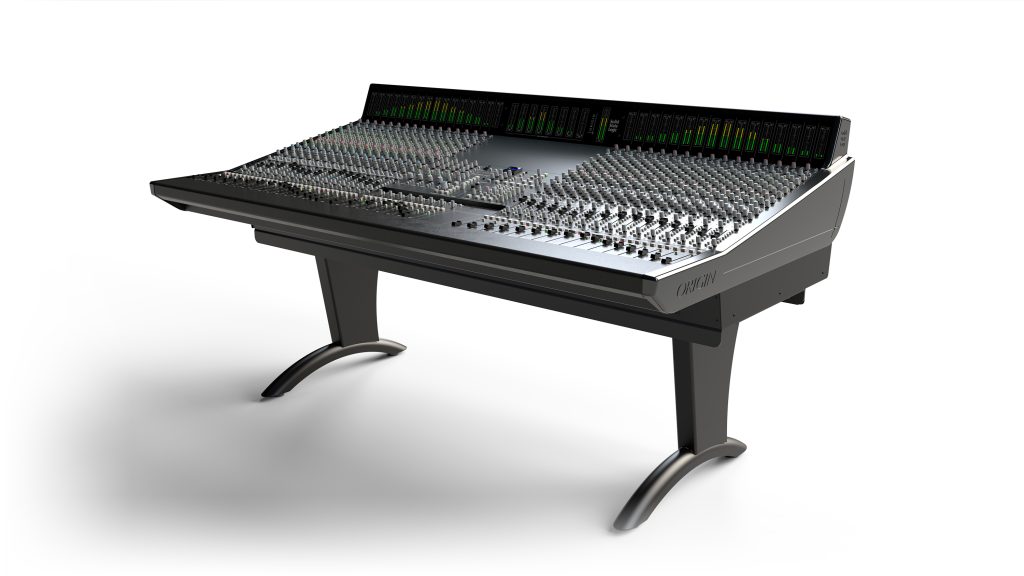
Our 2448 replaced the SSL ORIGIN 32 in our studio. The ORIGIN remains a console I rate highly, but the API’s construction, sound and serviceable modular design made it a compelling choice for us.
Construction and serviceability
The 2448 has the substantial feel I want from a studio’s main console. API describes it as built to the same standards as its larger Vision and Legacy AXS consoles. My own impression is of that same commitment to quality in a smaller format.
Modularity is a major attraction. The ability to service and replace modules matters when a console is intended to remain in use for many years. The 2448’s construction gives me confidence in it as a long-term studio investment, even though no piece of electronic equipment is maintenance-free.
Preamps and the summing bus
The microphone preamps are fantastic. They are one of the console’s strongest features and a central part of its appeal in our studio.
The summing bus is another highlight. Punchy and powerful is the best description of how it sounds to us. Together with the build quality and the feel of the controls, it makes the 2448 a particularly satisfying console to use.
EQ choices and configuration
Our console was supplied without EQ modules. Standard configurations include API 550A and 560 equalizers; the published 24-channel configuration combines sixteen 550As with eight 560s. Its modular EQ arrangement is useful for owners who want to make different choices.
The console is available in 24-, 32- and 40-channel frame sizes, with layouts that can incorporate a producer’s desk and 19-inch rack bays. Channel expansion and automation are worth discussing with API when specifying a system or planning changes to an existing one, since the work required depends on its frame and configuration.
More inputs than the surface suggests
The available input count is surprisingly high. Each input channel has two signal paths, and the four stereo returns add more sources at mixdown. API specifies 56 inputs available to the mix bus in the 24-channel frame. That total is not a count of 56 microphone preamps.
There are eight multitrack buses, eight auxiliary buses and a stereo program bus. The eight multitrack buses are a limitation compared with the ORIGIN 32’s sixteen. For someone who needs extensive bus routing, that difference deserves attention.
Connections and surround monitoring
The physical connections are another point in the API’s favor for me. D-sub connectors are used for the additional line-level inputs; they are not the format used for almost all of the main console connections. That is an important practical distinction from the ORIGIN.
The centre section also supports 5.1 monitoring. This means a six-channel external source can be monitored through its control-room facilities; it should not be confused with a dedicated 5.1 mix bus.
Automation and DAW control
Our console does not serve as a DAW controller. That is a limitation worth stating clearly for anyone hoping to combine analog mixing and workstation control on one surface.
API’s optional Final Touch Automation system is a separate consideration. It adds motorized-fader automation, and API currently lists DAW control with unity-gain audio bypass among its features. Buyers should confirm what the particular console and automation version they are considering support. Our comments on DAW control refer to our own configuration.
Verdict
The 2448 is expensive, substantial and built with a level of quality that is apparent every time I touch it. Its microphone preamps and summing bus are excellent, and the modular, serviceable construction is a major part of its appeal.
We gave up some multitrack buses when it replaced our ORIGIN 32, and our configuration does not control the DAW. Those are real considerations, but the overall experience is deeply positive. For a studio that values analog sound, physical quality and long-term serviceability, the API 2448 earns a strong recommendation.
API 2448 features and configuration options · API manuals and technical documentation · 24-channel rear connector layout