Mixing Console Reviews
SSL ORIGIN 32 vs API 2448: Why I Switched Consoles
Manufacturer: Solid State Logic
In this article
- The real reason I switched: the API sounded better to me
- The SSL is the better value in several obvious ways
- Ergonomics: I never stopped having to think about the SSL
- Construction philosophy matters when you intend to keep a console
- Power supplies tell the same story
- Cabling: the difference becomes obvious behind the consoles
- The API is not frozen in the configuration you buy
- The serviceability question is not theoretical
- The ORIGIN still has a sound and workflow that people genuinely want
- And then there is the part you cannot put in a comparison chart
- Why the API stayed
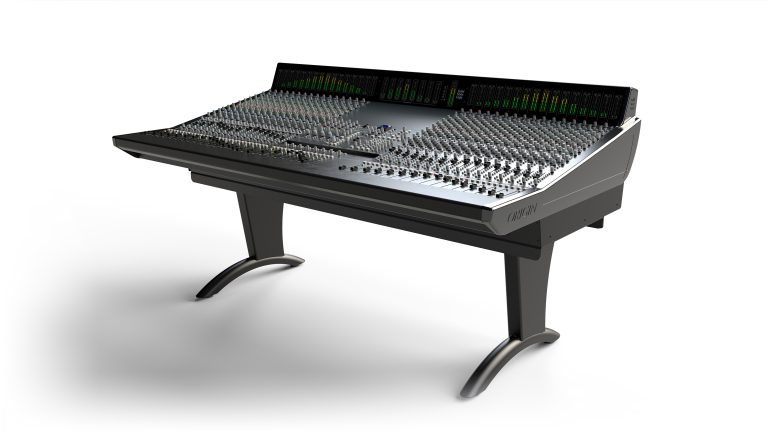
The SSL ORIGIN 32 was the more sensible purchase on paper. It gave me more channels, more buses and EQ on every channel for less money. I still replaced it with an API 2448.
That sounds contradictory until you separate what looks good on a specification sheet from what matters when you actually live with a console. I owned both in the same studio. I tracked through both, mixed through both and had to integrate both with the same patching, outboard and monitoring. The API did not win because it had more features. It won because I preferred the way it sounded, the way it worked and the way it felt like something I could still be repairing instead of replacing twenty years from now.
The ORIGIN was not a mistake. It was a very capable console, and its new owner in San Diego is extremely happy with it. It just was not the console I wanted to keep.
The real reason I switched: the API sounded better to me
The biggest reason was the simplest one. I preferred the API sound.
The 2448 has the forward, energetic midrange I associate with API. It feels punchy and immediate, and the microphone preamps are a major part of that. I do not regard them as console preamps that are merely convenient because they happen to be there. They are preamps I actively want to record through.
That distinction mattered in our studio because we track as well as mix. If I were using the desk mainly as an analog summing and mixing surface, the balance might tilt more toward the SSL. The ORIGIN has a different presentation that a lot of people love, and its stereo bus compressor is one of the most instantly satisfying built-in mix tools I have used. Engage it and the mix starts behaving like a record.
But when the console is also the front end of the recording chain, I care more about the sound of the microphone preamps than I do about having another eight buses or another eight channels. That is where the API won for me.
The SSL is the better value in several obvious ways
It would be easy to make this article unfair to the ORIGIN because I sold it. That would miss the point.
The ORIGIN 32 gives you thirty-two inline channels, four-band E-Series-style EQ on every channel, sixteen track buses, direct outputs, a serious center section and the SSL bus compressor. You buy the desk and it is immediately a complete console.
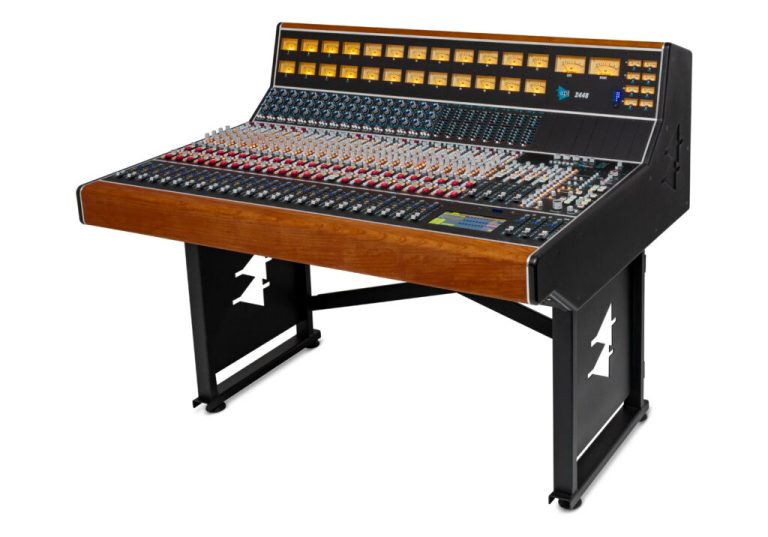
The API is a different proposition. The 2448 can be ordered in 24-, 32- and 40-channel frames, but it costs substantially more and the modular approach means configuration matters. Ours was purchased unloaded and we later filled it with twenty-four dbx 530 equalizers. I like that flexibility, but it is not free.
The API also has eight multitrack buses rather than sixteen. That is a real limitation if your workflow depends on a lot of analog subgrouping or routing. For the way we work, eight is enough. For another studio, it may not be.
So there is no difficulty conceding this point: if your priorities are maximum analog-console functionality per dollar, channel count and a complete feature set from day one, the ORIGIN is extremely persuasive.
Ergonomics: I never stopped having to think about the SSL
This was the part I underestimated before owning the ORIGIN.
The console is logically designed, but I found the surface too dense. There are a lot of controls packed into a relatively small area, and I frequently had to look harder than I wanted to identify exactly what I was reaching for. Some legends were difficult to read from a normal working position, and related functions did not always announce themselves visually in the way my hands wanted them to.
I am sure that if I had spent years on the desk it would eventually have become second nature. Engineers who grow up on SSLs can move around them astonishingly quickly. I simply never reached that point with the ORIGIN.
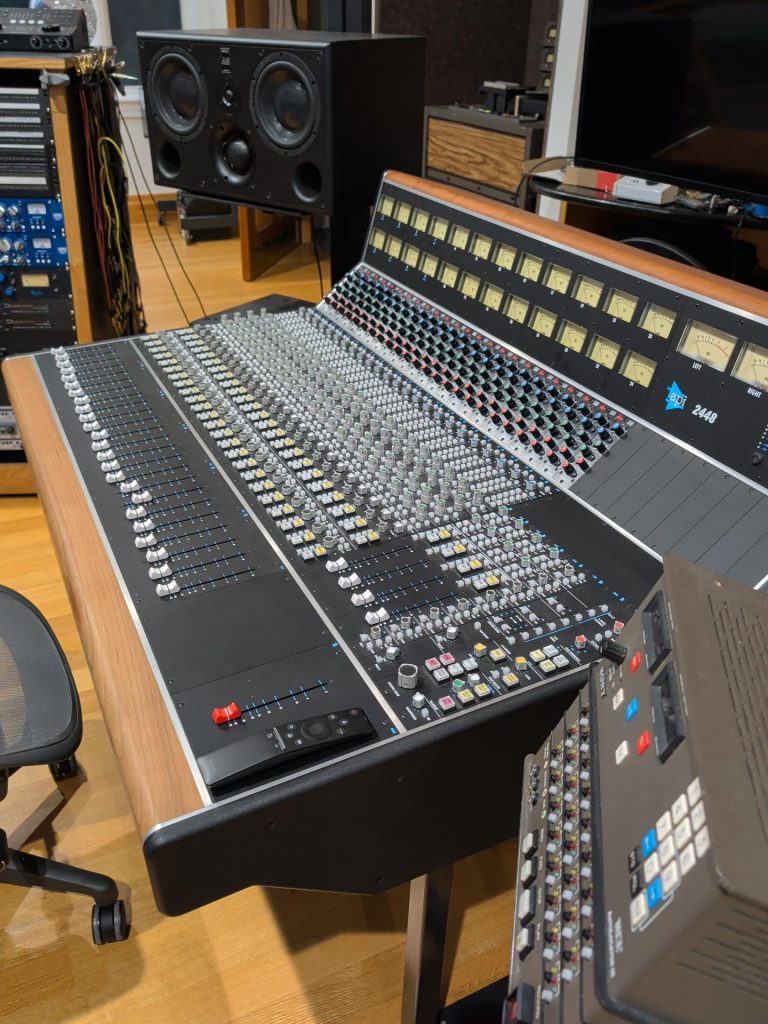
The API is easier for me to read physically. I am not claiming that it has an objectively superior layout for everyone. It just disappears under my hands more readily. I spend less time decoding the surface and more time using it.
This is also why the newer ORIGIN EVO does not automatically appeal to me more. EVO adds useful channel dynamics and filtering, but it also puts still more control onto essentially the same basic working area. For somebody who wanted more processing directly under their fingers, that is a substantial improvement. For me, it moves further toward the very density I found troublesome.
Construction philosophy matters when you intend to keep a console
The longer I own studio equipment, the more I care about what happens after the warranty period rather than during it.
API describes the 2448 as an all-discrete console, and its architecture follows the same general service philosophy that has defined API consoles for decades: removable modules, 500-series processing, discrete op amps, external power and a design that expects the desk to be maintained rather than discarded. API also still operates a parts and service department from its facility in Jessup, Maryland.
The 2448 is American-made; API itself has described its console products as hand assembled, and contemporary API material identifies its factory and service operation in Jessup. Our desk certainly feels like that kind of product. It is massively built for its size, the metalwork and controls feel substantial, and the whole thing gives the impression of a machine rather than an appliance.
The ORIGIN follows a much more modern manufacturing model. SSL told Production Expert when the console was launched that the modules are manufactured and assembled in China under SSL oversight, while the chassis and frame are made in the UK and the completed console is assembled and tested at SSL in the UK. There is nothing inherently wrong with that arrangement; SSL said the quality of the Chinese-made modules actually exceeded its initial expectations.
What I cannot substantiate is the stronger internet shorthand that the API is “all through-hole” while the SSL is “all SMD and wave-soldered.” The construction philosophies are plainly different, but I have not found primary documentation proving that every PCB in either desk uses only one assembly technology. I would rather make the narrower claim we can support than turn a real difference into an inaccurate absolute.
Power supplies tell the same story
The power arrangements are visibly different before you remove a single panel.
The API uses a separate main power supply connected to the console through a large multi-pin military-specification connector. The supply that came with our console is heavy and reassuringly overbuilt. API also provides a separate connection for the optional Final Touch automation supply and an expansion connector on the rear utility panel.
The ORIGIN brings mains power directly into the console through rear IEC inlets and uses its internal power system together with SSL’s sleep/wake power-management scheme. SSL specifically designed the console to be powered up and down regularly, rather than left running continuously like many older large-format desks.
I had thought of the ORIGIN supplies as switch-mode units, and that may well be how they are implemented, but SSL’s published material does not state that clearly enough for me to present it here as a verified fact. What is certain is the architectural difference: large external API supply versus power conversion inside the SSL frame.
Cabling: the difference becomes obvious behind the consoles
This is one of the least glamorous differences and one of the most important when you actually install the desks.
The ORIGIN is heavily dependent on DB-25. SSL’s own installation guide shows the channel line inputs, both sets of insert sends and returns, direct outputs, buses, stereo groups, external inputs, cues, auxes and even monitor outputs on DB-25 connectors. The channel microphone inputs are the obvious XLR exception.
That makes for a neat rear panel, and if the entire room is being designed around DB-25-to-patchbay looms it can be very efficient. But it also means buying, labeling and managing a lot of multipair cable. I never loved that aspect of the installation.
The API is more mixed. Each 2448 channel has individual XLR microphone and line inputs, while the insert sends and returns are on quarter-inch TRS. DB-25 is still used—so it would be wrong to say the console avoids it—but it is concentrated in functions such as alternate line inputs, direct outputs, auxiliary and bus outputs, stereo-return inputs and some multichannel playback connections.
In practice I prefer the API approach. It is easier to connect a single piece of equipment without building or breaking out another eight-channel loom, and a fault in one cable generally affects one connection instead of an entire bank.
The API is not frozen in the configuration you buy
The 2448 is not especially easy or cheap to expand, but it was designed with expansion in mind.
API offers 24-, 32- and 40-channel frame configurations, along with producer desks and rack-bay options. The operator’s manual also documents a dedicated expansion port that carries the program, summing, auxiliary and solo buses along with channel-control functions to an expansion console.
Automation is another path. API’s Final Touch system adds moving-fader and switch automation, and the company sells automated 2448 configurations alongside manual-fader versions. The rear panel includes dedicated automation power and control connections. None of this should be confused with clicking a checkbox and upgrading the desk in an afternoon; depending on the starting configuration, the cost and labor can be substantial. But the architecture leaves somewhere to go.
That matters to me. A console this expensive should not become a dead end simply because the studio changes around it.
The serviceability question is not theoretical
One reason I place so much emphasis on this is that an analog console is exactly the kind of product that can remain useful for decades if the owner can keep it running.
There has been a long-running Gearspace discussion around SSL serviceability, including references to an ORIGIN power-supply repair that became controversial because of the cost and the difficulty of obtaining service information. The forum discussion is anecdotal and does not prove that ORIGIN power supplies are unreliable. That is not the claim I am making.
What it does illustrate is the ownership question: when an otherwise ordinary part fails ten or fifteen years from now, can a competent local technician identify it, obtain it and get the console working again without the manufacturer controlling every step of the repair?
This later Gearspace discussion refers directly back to the ORIGIN power-supply episode and debates exactly that point. I would not use a forum thread to judge the reliability of the entire product line, but it did nothing to reduce my concern about long-term service access.
The ORIGIN still has a sound and workflow that people genuinely want
None of the construction or service discussion changes the reason people buy SSL consoles.
The ORIGIN sounds like an SSL in the ways that matter. It is clean when you want it to be, the PureDrive preamps can be pushed for more character, the E-Series-style EQs are useful, and the bus compressor remains a very persuasive mixing tool. There are engineers for whom that combination is exactly the point.
If I ran a room focused mainly on mixing, wanted thirty-two channels available immediately, needed sixteen buses and liked the SSL layout, I could easily make the opposite choice. The ORIGIN 32 remains an unusually capable analog console for its price.
And then there is the part you cannot put in a comparison chart
The API simply feels special to me.
That is not a technical argument, but after enough years around recording equipment I no longer dismiss it. A console is an instrument you may touch for eight or twelve hours at a time. The way the controls move, the way the desk looks across the room, the way it responds when you push a signal into it—all of that affects the experience of making a record.
The API makes me want to sit down and work. I like the sound before I start doing anything clever. I like the physical feel of it. I like knowing that the design is modular and that there are plausible paths to service, automation and expansion. It feels like something intended to stay in the room.
The SSL never created that same attachment for me. It did its job very well. I just never loved it.
Why the API stayed
The ORIGIN gave me more for less: more channels, twice as many multitrack buses and EQ on every input, all in a complete package. If those are the priorities, it may be the better buy.
The API stayed because the priorities in this studio are different. We track through the console, and I preferred the API preamps and the forward, exciting character of the desk. I found it easier to operate. I preferred the rear-panel connectivity. I had more confidence in its long-term serviceability, and the ability to automate or expand it meant the console did not feel locked to the day it was purchased.
Most of all, it became a piece of the studio rather than merely equipment in the studio.
The ORIGIN has since gone to a new owner in San Diego, and by all accounts he is delighted with it. That is probably the best ending for this comparison. There was nothing wrong with the SSL. I simply found the console that suited me better.
Technical references: API 2448 product information · API 2448 manuals and service documentation · SSL ORIGIN product information · SSL ORIGIN installation guide · Production Expert on ORIGIN manufacturing