Mixing Console Reviews
Neotek Series III C Review: Sound, Reliability & Buying Advice
In this article
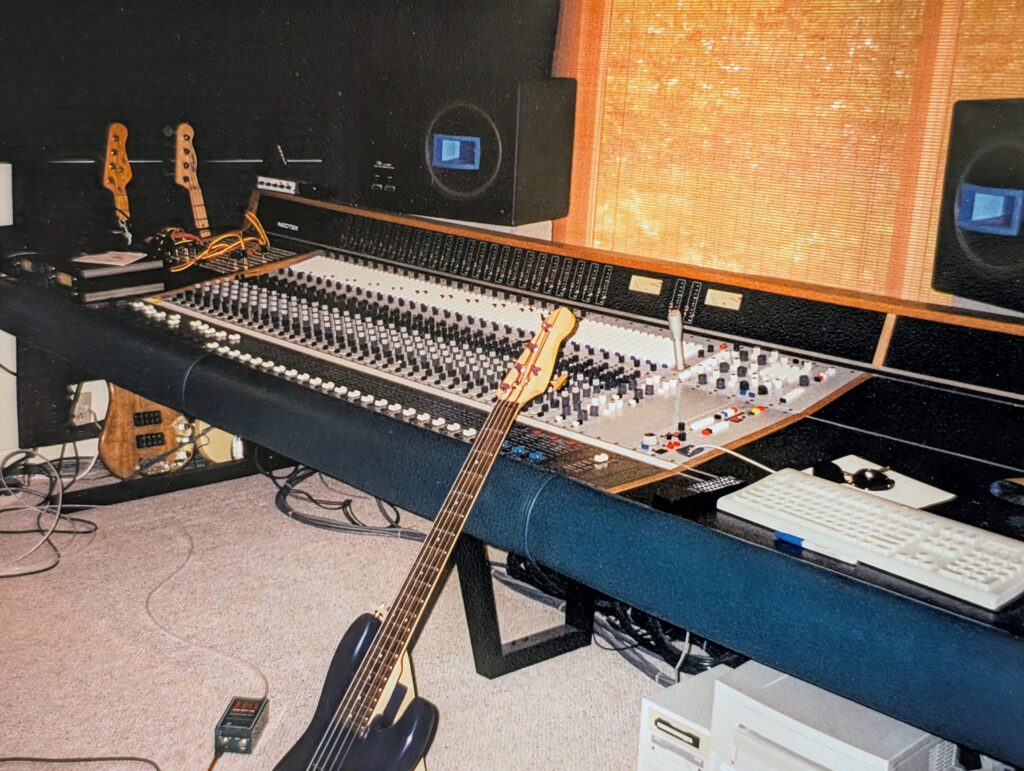
There are some consoles you remember because they imposed a particular sound on everything that passed through them. The Neotek Series III C isn’t one of those. I owned one from the 1990s into the 2000s, and what I remember most is how little it got in the way.
I bought mine from a television station. Even then, the console was probably around fifteen years old. It had already enjoyed a substantial working life before it arrived in my studio, and it went on to give me many more years of service. That’s a pretty good advertisement for the quality of its original construction.
A straightforward American console
Neotek never had quite the glamour of Neve, SSL, Harrison or MCI, but the company made serious professional recording consoles. The Series III C reflected a refreshingly uncomplicated approach to engineering: good components, sensible circuitry and a design that was comparatively easy to understand.
Earlier Neotek desks used a more hardwired approach, with connections between modules and buses that could make servicing less convenient. Somewhere around the Series II E and III C era, the company moved toward more readily removable, plug-in modules. I wouldn’t swear to the exact model at which that transition occurred, but the practical difference mattered. A console is considerably easier to live with when a problem channel can be removed and serviced without dismantling half the desk.
How did the Neotek Series III C sound?
Open, natural and transparent. Those are the words I would use.
The Series III C wasn’t a console that tried to flatter every signal with an obvious sonic fingerprint. It didn’t have the aggressive personality some people associate with certain classic British desks, nor did it seem designed to make a statement simply by passing audio through it. It was a clean, capable recording and mixing tool that let you hear what you were doing.
That’s not faint praise. If your microphones, instruments, recording chain and monitoring are doing their jobs, a console that stays out of the way can be exactly what you want. I never felt that my Neotek was the weak link in the recording chain.
Reliability and construction
My experience with the Series III C was overwhelmingly positive. Considering its age when I bought it, the desk proved remarkably dependable. It was not especially exotic internally, and that’s part of its appeal. Good parts and straightforward design can be more valuable over the long term than elaborate engineering that requires a specialist every time something goes wrong.
Of course, age catches up with everything. A forty-year-old analog console is still a forty-year-old analog console, regardless of how well it was made. Switches, connectors, capacitors and power supplies all deserve attention. The fact that Neotek desks still have a market decades later says something about their underlying merit, but it doesn’t make the cost or inconvenience of maintenance disappear.
The Adrian Belew and Steve Albini connection
Neotek also has an interesting place in recording history. Adrian Belew was among the notable musicians associated with the company’s consoles. Steve Albini was an especially enthusiastic Neotek user, and Electrical Audio became closely identified with the brand. Albini used multiple Neotek desks, including a custom console at Electrical Audio.
That association makes sense to me. Albini’s recording philosophy emphasized capturing a performance rather than imposing a fashionable sound on it, and Neotek’s relatively transparent character fit that approach.
The problem with buying one today
For years, Sytek Audio Systems and Mike Stoica, who had worked with Neotek, were important resources for people trying to keep these consoles operating. My understanding is that Stoica has retired. I would verify the current availability of support before committing to a purchase, because finding someone who really understands an aging Neotek may be more difficult than finding someone willing to take a look at it.
That’s my biggest reservation today. It isn’t that I suddenly dislike the console. Quite the opposite: I remember mine fondly. But owning a large-format vintage analog desk is a different proposition when specialized parts and experienced technicians may be scarce.
Would I buy another Neotek Series III C?
Possibly, at the right price, in the right condition, and with a clear plan for service. But I wouldn’t buy one simply because it was a bargain compared with a more famous vintage console. The purchase price is only the beginning of the economics. Moving, installing, wiring, maintaining and eventually repairing a large analog desk can make an inexpensive console surprisingly expensive.
If I were putting together a studio today and wanted a practical large-format analog console, I’d be inclined to look at something newer. The SSL Origin 32, which I’ve also reviewed here, is a particularly compelling alternative. It gives you a modern, supportable console rather than an ongoing restoration project. That doesn’t mean it has to be everybody’s choice, but the practical advantages are difficult to ignore.
Final thoughts
The Neotek Series III C was a very good console, and I enjoyed owning mine. It was reliable, intelligently constructed and, most importantly, sounded excellent without drawing attention to itself. I have no trouble understanding why people still seek out these desks.
Would I recommend buying one now? With qualifications. If you understand the maintenance implications and have access to competent technical support, a good Series III C can still be a satisfying centerpiece for a studio. If what you really want is to make records rather than maintain a vintage console, I’d think carefully about a newer alternative.
I’m glad I owned one. I’m not entirely sure I’d want to own another one today.