Mixing Console Reviews
Mackie 8-Bus: A Jagged Little Console
In this article
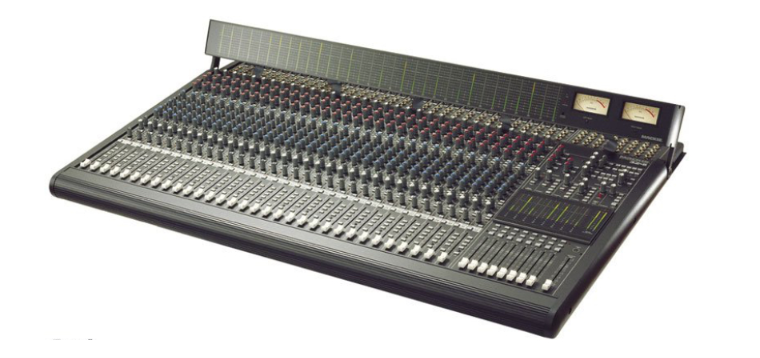
I’m not sure any console in history has had as much hate heaped upon it as the Mackie 8-Bus.
In the 1990s, the Mackie 8-Bus was practically the de facto standard in project studios. There were alternatives. I had a Studiomaster P7, primarily because I didn’t want a Mackie. There was the Allen & Heath GS3, and then the Soundcraft Topaz, which was something of a plasticky mess. But Mackie was the one everybody knew.
And here’s the funny thing: it was actually a pretty good console in a lot of respects. It was durable, well made, and intelligently engineered. Underneath all that metalwork was a sectional, modular construction that was surprisingly modern for the time. Greg Mackie was a genius. There’s really no debating that.
So why did everybody hate the sound?
That’s where things get interesting. The 8-Bus developed a reputation for sounding harsh, thin, and generally unpleasant. I’m not going to pretend it was a wonderful-sounding console, but I think a substantial amount of the blame was misplaced.
Remember who was buying these things. For many owners, this was their first serious recording console. They didn’t have great microphones, monitors, outboard equipment, or acoustically treated rooms. And practically everybody was recording to ADATs or DA-88s, which weren’t exactly guaranteed to produce beautiful results in inexperienced hands.
So you’ve got mediocre microphones, questionable monitoring, bad acoustics, and somebody still learning how to record. And somehow the Mackie gets blamed for everything.
Don’t blame the summing bus for everything
The summing bus was another favorite target. The truth is, it was decent if you didn’t abuse it. Unfortunately, people abused it constantly. A lot of engineers thought hotter was always better, and the Mackie wasn’t particularly forgiving. Unlike some analog gear that becomes pleasantly saturated when driven, the 8-Bus generally sounded worse the harder you pushed it. There wasn’t some magical sweet spot where everything suddenly became bigger and warmer. You just made it sound worse.
A jagged little footnote
It’s tempting to bring up Alanis Morissette’s Jagged Little Pill as proof that a Mackie could make a hit record. But the distinction matters: contemporary reporting identifies a Euphonix CSII as the console at Glen Ballard’s studio where the album was principally made. Engineer Christopher Fogel did describe using a Mackie in a mobile recording setup for Morissette’s live vocals—and even said it sometimes sounded better than the API preamps he had available. That’s a rather more interesting endorsement than the usual mythology, even if it isn’t evidence that the album was mixed on an 8-Bus.
Did it deserve all the hate?
Countless demos and independent recordings passed through Mackie 8-Bus consoles, and an entire generation of aspiring engineers got their start on them. These desks made serious multitrack recording accessible to people who couldn’t possibly afford a large-format professional console.
There are still plenty floating around, and they’re inexpensive. If you need a durable, American-made analog mixer for noncritical work, you could do considerably worse. Would I buy one specifically for analog summing because I thought it would sprinkle some special sauce over my mixes? Absolutely not.
Would I want one today? Not really. But I have more respect for the Mackie 8-Bus than its reputation would suggest. It wasn’t responsible for every terrible recording made in the 1990s. Sometimes it was just the guy sitting behind it.