Other Cool Stuff
The Best Studio Chairs: Aeron, Steelcase, Knoll, Budget Alternatives—and the Used Aeron Trap
In this article
- What makes a chair work in a recording studio?
- Herman Miller Aeron: the editor’s choice
- Herman Miller Setu: automatic recline with a gliding feel
- Steelcase: Leap and Gesture
- Knoll: Generation and other designs worth trying
- Good chairs without premium-chair prices
- What about the really cheap chairs?
- The refurbished, “demo” and “open-box” Aeron trap
- Setting the chair up for a studio
- The buying verdict
A studio chair seems like an afterthought until a mix turns into an eight-hour session. The chair at the console or DAW affects posture, comfort, access to controls, and how freely you can move between keyboard, faders and outboard gear. It also should not creak during quiet recordings. The best chair is not necessarily the chair with the most adjustments: it is the one that fits the operator and the room.
Our editor’s personal choice is the Herman Miller Aeron. That is a preference, not a claim that it fits everyone. This guide also examines Steelcase, Knoll, and less expensive alternatives, and explains why a tempting “open-box demo Aeron” listing may be much less of a bargain than it sounds.
What makes a chair work in a recording studio?
Most studio furniture discussions focus on the console, speakers and desk, but seating deserves comparable attention. A good studio chair needs smooth, repeatable seat-height adjustment; appropriate lumbar and seat support; stable recline; and arms that can be lowered, adjusted or moved out of the way. Overly wide or high arms can interfere with guitar playing or prevent the chair from fitting under a console. A tall back or headrest may obstruct movement and make close work at a desk uncomfortable.
Look for a five-star base, casters appropriate for the floor, and upholstery that will tolerate years of use. Mesh ventilates better in a warm control room, while upholstered seats may distribute pressure more comfortably for some people. Try the chair for at least 20–30 minutes if possible, preferably at the actual working desk height. No chair eliminates the need to move and stand regularly.
Herman Miller Aeron: the editor’s choice
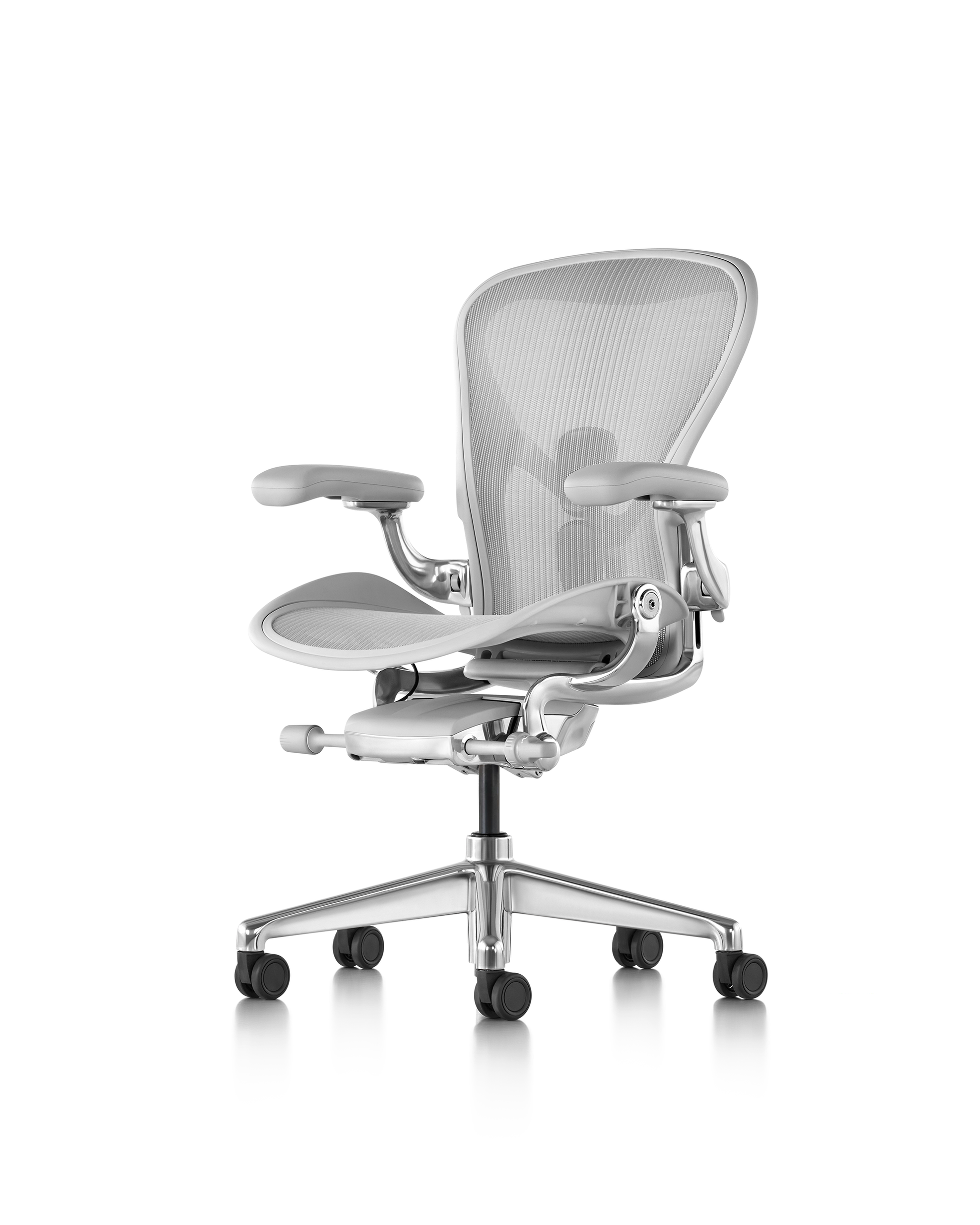
The Herman Miller Aeron remains a compelling studio chair: breathable suspended mesh, a stable tilt mechanism and an unusually well-established replacement-parts ecosystem. Size matters. Aeron sizes A, B and C are different physical shells, not merely variations in gas-cylinder height. An ill-fitting Aeron can feel worse than a less expensive chair that correctly supports the thighs and lower back.
Aeron has been sold in different generations. The older Classic and the 2016-era Remastered have different tilt, back support and mesh details; options such as lumbar support, PostureFit, arm adjustment and forward tilt also vary. An online listing that says only “fully loaded Aeron” is insufficient: ask for the actual model, size, manufacturing-label photograph and a demonstration of each claimed adjustment. For a studio, verify that the arms clear your console and that the chair remains quiet when you lean or swivel.
New Aeron chairs purchased through eligible authorized channels carry Herman Miller’s stated 12-year warranty. That warranty should not be assumed to accompany a privately resold or third-party refurbished chair. Herman Miller explains that it cannot guarantee unauthorized resellers’ components and does not extend its manufacturer warranty to such purchases.
Herman Miller Setu: automatic recline with a gliding feel
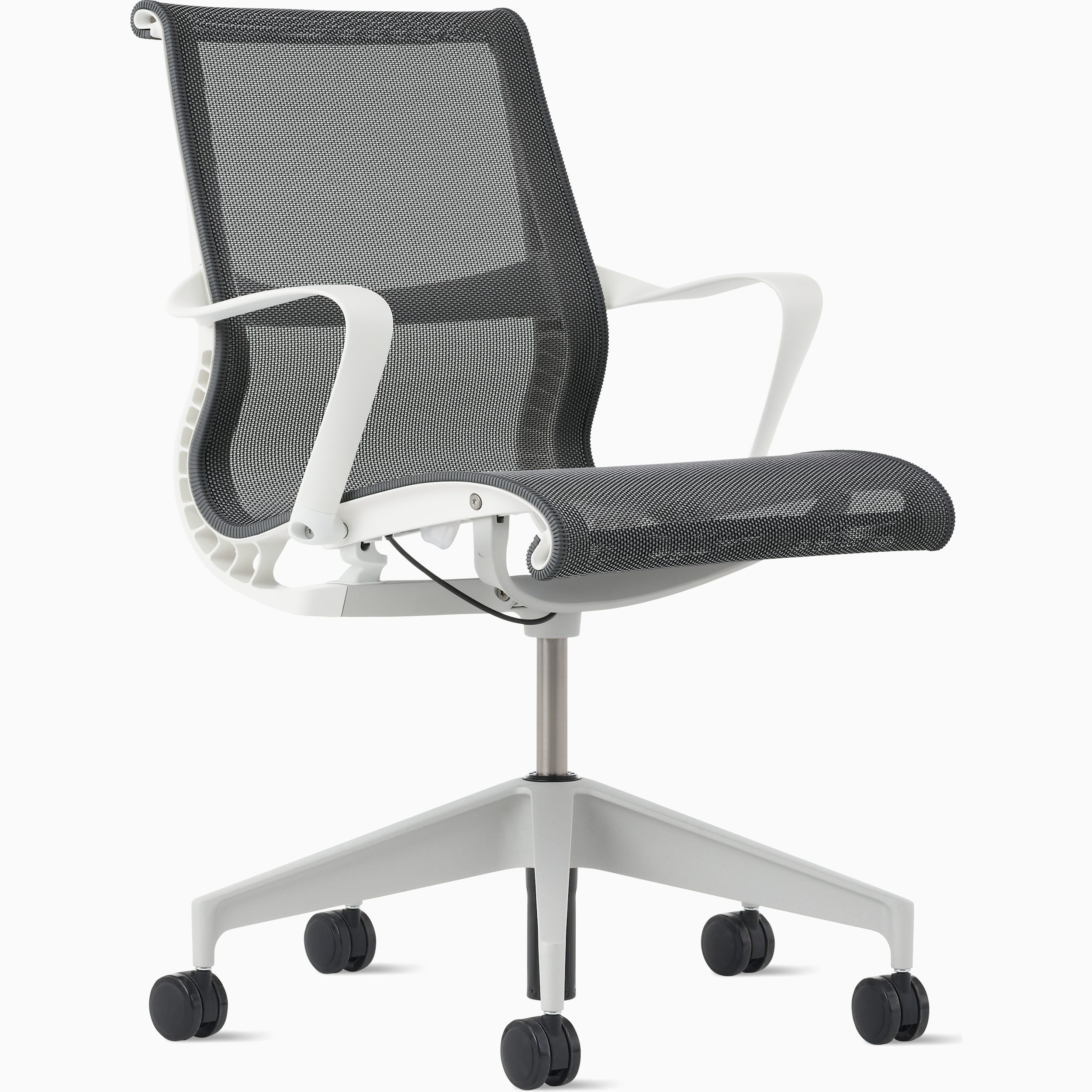
The Herman Miller Setu has an unusual continuous-looking mesh seat and back, plus optional sculpted Ribbon Arms. Developed with Studio 7.5, its flexible Kinematic Spine responds to the user’s movement and weight, allowing recline without the manual tilt-tension controls found on many conventional office chairs. It can feel somewhat like a gliding chair, although the back still flexes and reclines rather than moving on a separate horizontal glider track.
For a DAW or mixing room, the Setu’s responsive movement, ventilation, and relatively simple operation make it worth considering alongside the Aeron. The trade-offs are fewer fit and support adjustments than more configurable task chairs, and the curved, fixed Ribbon Arms can interfere with guitar playing, close console positioning or pulling the chair under a desk. Check the arm style and seat fit carefully; the Setu is not simply an automatically adjusting Aeron.
Steelcase: Leap and Gesture
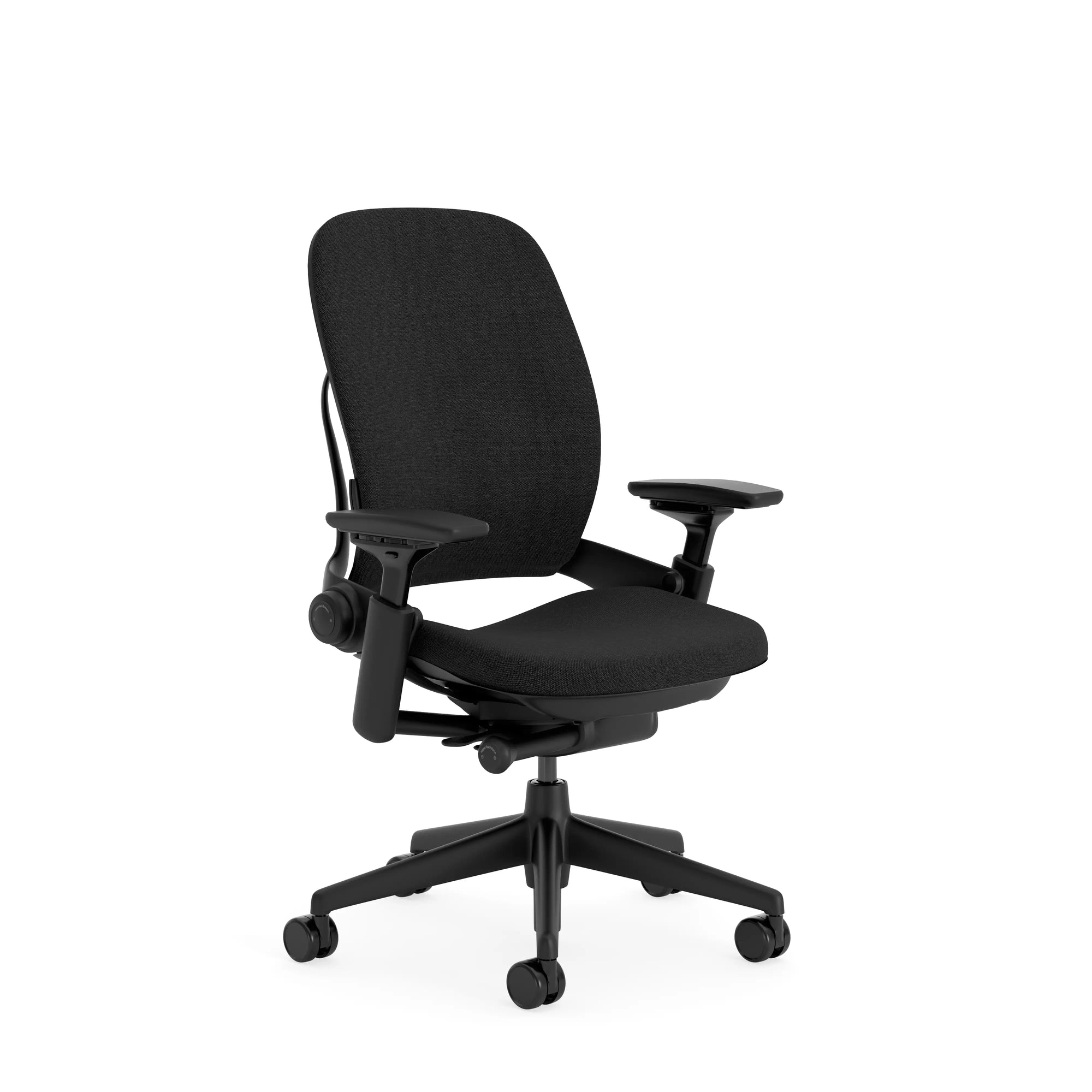
The Steelcase Leap is a strong alternative for someone who dislikes the Aeron’s framed mesh seat. Its padded seat and adjustable seat depth can better accommodate changing postures, and the back responds to movement. Leap is especially worth trying for operators who alternate between editing, keyboard work and console mixing.
The Steelcase Gesture is particularly interesting for its extensive arm adjustability. The arms can be positioned to support different desk and device postures, although studio users still need to check whether they retract sufficiently to play instruments or move along a large console. Steelcase documents a 12-year parts-and-labor warranty for these chair models, subject to its actual purchase and warranty terms. As with Herman Miller, ask a third-party used-chair seller precisely whose warranty is being offered.
Knoll: Generation and other designs worth trying
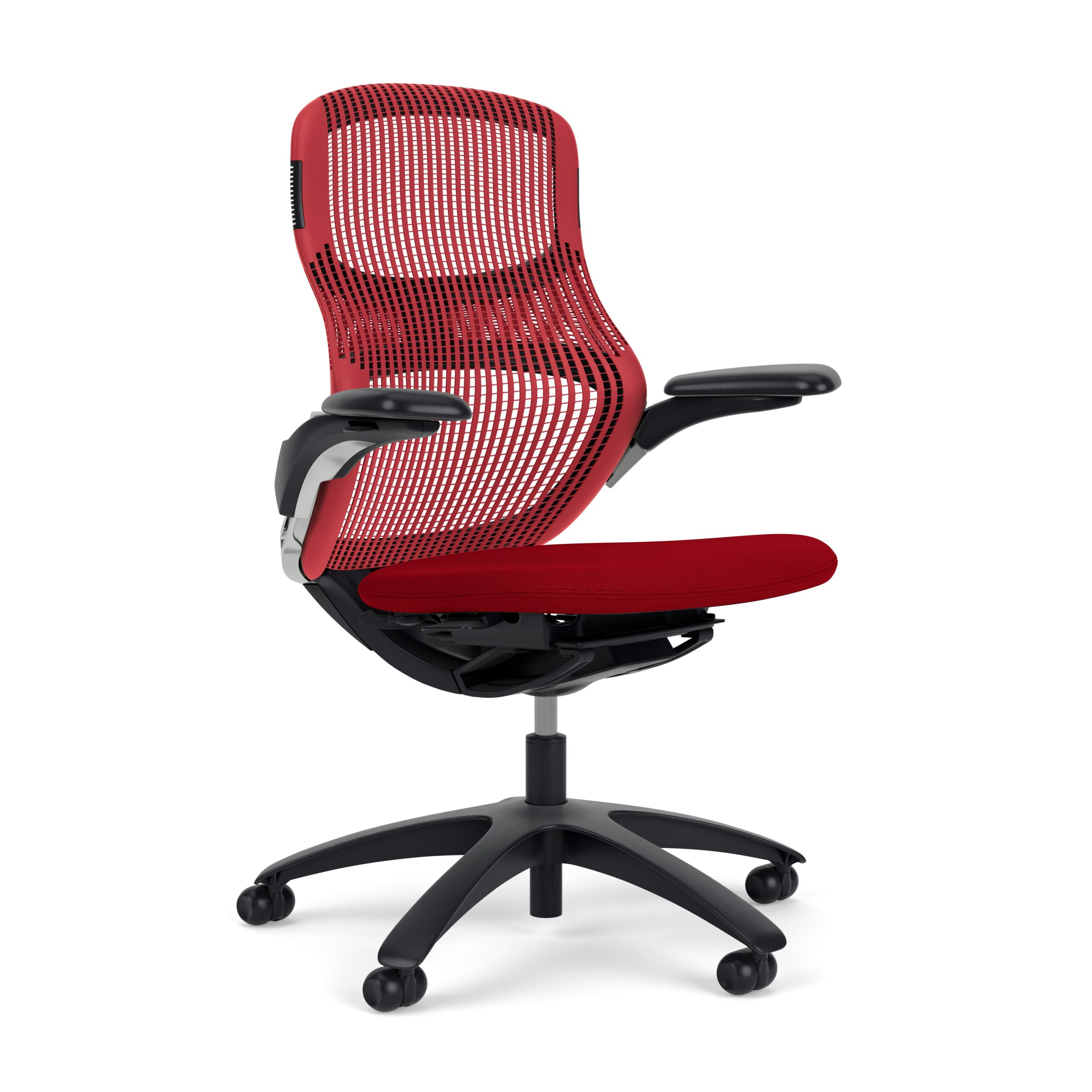
The Generation by Knoll takes a noticeably different approach with a flexible back and seat edges that support changes in posture. It allows movement that can be useful when reaching across a mixing desk, rather than keeping the operator fixed in a single upright position. Knoll lists a 12-year warranty on the model, subject to terms. It will not suit everyone: its flexible feel is different from a conventional high-back padded chair.
Also consider the Knoll ReGeneration and Knoll Life if you encounter them at a dealer or reputable used-office-furniture showroom. They differ in back construction, recline and degree of adjustability. Some configurations are older or used inventory; verify the exact model and service-parts availability rather than assuming it is a current catalog specification. A chair that permits easy sideways reaching may be better at a large analog console than one optimized solely for typing.
Good chairs without premium-chair prices
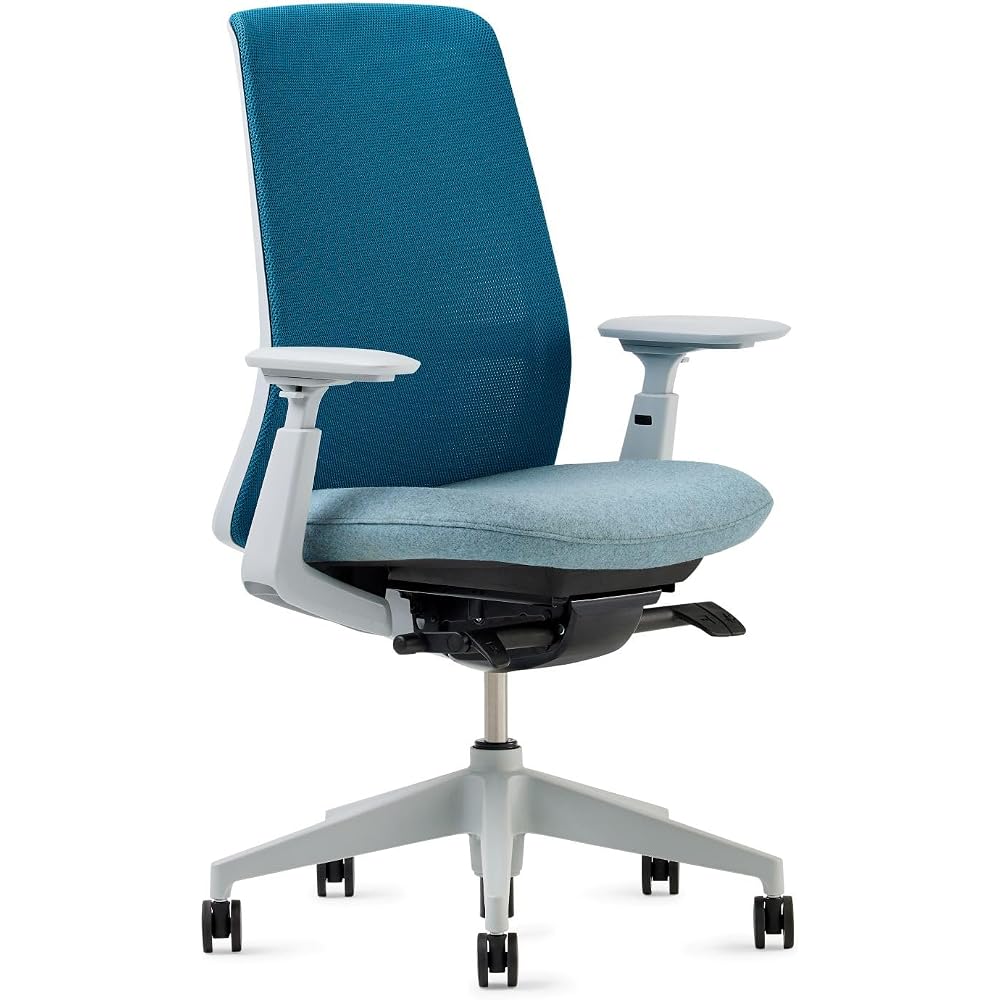
Haworth Soji: a serious ergonomic task chair with adjustable seat, recline and available lumbar options. Haworth currently lists a configurable model at approximately $700, with a 12-year warranty and a 30-day trial subject to terms. It deserves consideration against used premium chairs, rather than simply against inexpensive online mesh products.
Branch Ergonomic Chair Pro: a comparatively affordable new chair listed around $499 at the time of writing. Its specifications include seat depth adjustment, adjustable lumbar support, numerous arm adjustments and a seven-year warranty. If an Aeron is beyond budget and buying used is unattractive, this is worth comparing firsthand. Check fit and returns rather than equating a long feature list with long-term comfort.
IKEA MARKUS: a relatively straightforward option, currently listed by IKEA in the roughly $300 range for some sizes and finishes. Its adjustment range is more limited than the premium chairs. It can be a sensible choice if its dimensions fit the user, but the high back and arm arrangement may not be ideal at every console.
Used commercial-grade chairs: a genuinely good-condition Steelcase Leap, Knoll Generation or Haworth task chair from a reputable local office-liquidation business can be better value than a new, unbranded $200 chair. The caveat is condition: sit in it, test tilt and cylinder, inspect the base and ensure that replacements are available. A locally inspectable used chair is often a safer purchase than a suspiciously cheap “new demo” imported through an anonymous marketplace storefront.
What about the really cheap chairs?
Sub-$150 office chairs are not all unusable, but the compromises are often concentrated in the components that matter most after months of daily use: the pneumatic cylinder, tilt mechanism, casters, arm mounts, seat foam and upholstery. Some advertise lumbar support but offer little useful adjustability; others use a mesh back with a thin foam seat that compresses quickly. An impressive-looking gaming chair with thick bolsters may actually restrict sideways movement at a console.
If money is tight, prioritize a stable base, correct dimensions, a straightforward warranty with an identifiable seller, and the ability to return the chair. Do not assume “ergonomic,” “orthopedic,” “executive,” or a large claimed weight rating proves comfort or durability. A low-cost chair for occasional editing is a different purchase from a chair occupied six to ten hours a day.
The refurbished, “demo” and “open-box” Aeron trap
Search marketplaces such as eBay and you may encounter Aerons described as demo, open box, like new, fully loaded or remanufactured. These terms are not interchangeable. Some sellers are legitimate businesses offering properly described used chairs, and not every inexpensive Aeron is fraudulent. The problem is that sellers can use language implying a nearly new showroom chair even when the product is an older, heavily used office chair that has merely been cleaned or fitted with replacement parts.
“Demo” does not establish age or usage. Ask for the manufacture year, actual underside manufacturing label, version (Classic versus Remastered), photographs of the specific chair rather than stock photos, documented replacement parts and a written description of its condition. Reupholstery, replacement arm pads or a fresh cylinder may improve an old chair, but they do not turn it into a new Aeron. Nor does an aftermarket “12-year warranty” equal Herman Miller’s own warranty.
Herman Miller now has its own official refurbished Aeron program. According to the manufacturer, those chairs are restored using genuine parts and carry a separate five-year Herman Miller refurbished warranty, rather than the new chair’s 12-year warranty. Its refurbished products have distinct return restrictions, including generally being final sale. That is a meaningful distinction from third-party refurbishers, whose guarantees are provided by the sellers themselves.
Red flags when buying a used Aeron online
- A “brand new,” “open-box” or “demo” description without a date-coded label or photographs of the specific unit.
- Stock images of a Remastered chair while the description or delivered product is a Classic.
- “Fully loaded” without a clear accounting of arms, lumbar/ PostureFit, tilt and seat-forward-tilt options.
- Claims of a manufacturer warranty from an unauthorized reseller.
- Ambiguous wording about original versus aftermarket mesh, casters, cylinder or mechanical parts.
- An unusually attractive delivered price with substantial restocking, return-shipping or freight deductions.
- No physical business address, no meaningful after-sales support or a seller unwilling to identify the age of the chair.
Before buying, ask: “Is this the actual chair pictured? What is its manufacture date and model? Which original parts were replaced, and with what? Who provides the warranty? Can I return it if the size or condition is not as represented, and what will return freight cost?” Keep the listing and correspondence. If an item is materially misrepresented, use the marketplace’s buyer-protection process promptly and document the mismatch.
Setting the chair up for a studio
Adjust the chair around the actual work surface, not an idealized office illustration. With feet supported and shoulders relaxed, set the keyboard/console height so elbows are comfortable and wrists are not forced upward. Lower or remove arms if they interfere with guitar playing or the front edge of the console. Confirm that casters and the back remain silent during close-microphone recording. A thick rug, floor protector or different caster set may help with rolling noise, but never install casters incompatible with the chair’s stem and rated load.
For a control room that alternates between DAW editing and playing instruments, a premium task chair plus a simple armless stool may be a more useful combination than expecting one chair to do everything. Keep monitor placement based on ear height and the intended listening geometry; if chair height changes substantially, monitor alignment may need revisiting.
The buying verdict
For our editor, the Aeron remains the personal favorite thanks to its breathable construction, proven design and familiar feel. The Steelcase Leap deserves equal consideration for anyone who prefers a padded seat, while Gesture is notable for its adjustable arms. Knoll Generation is appealing if freedom of movement matters. Haworth Soji, Branch Ergonomic Chair Pro and IKEA MARKUS provide sensible starting points below the premium price tier.
Most importantly, never buy a chair on brand name alone. Buy the right size, confirm how the chair fits the console, understand who is responsible for warranty service, and be skeptical of “demo” or “open box” language that the seller cannot substantiate.
Manufacturer references and current details checked November 2026. Prices, options and warranty eligibility can change. Product links are provided for research; an editorial preference is not a certification that a chair will fit every user.