Studio Monitor Reviews
ADAM Audio Studio Monitors Review: Not for Me
I like most German things. For a long time, I would only drive German cars. These days, they’re generally overcomplicated, too expensive, have too many controls, and seem increasingly designed around what the Chinese market wants. Porsche is still an exception. I still like the 911.
But we’re not here to talk about cars.
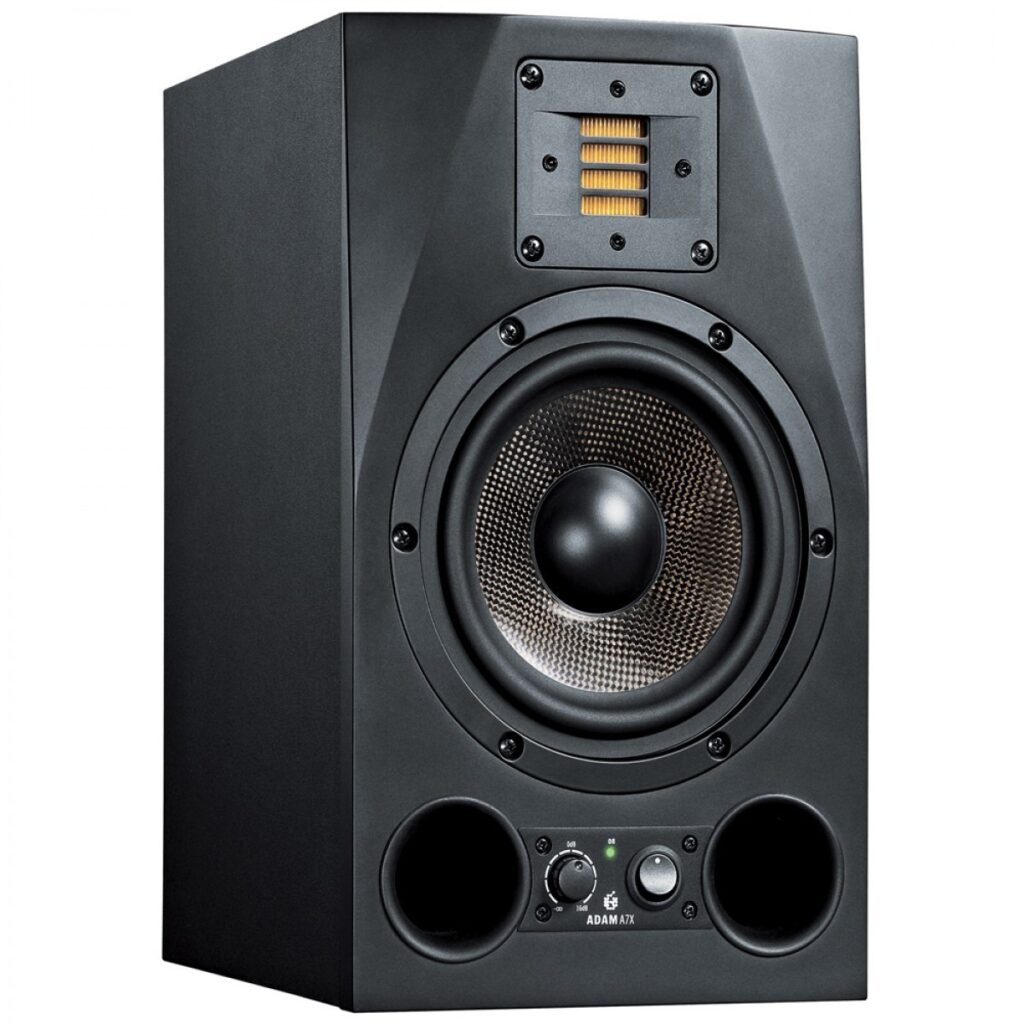
We’re here to talk about ADAM Audio speakers, and unfortunately, my experience with them has been considerably less pleasant.
I first became acquainted with ADAM monitors around 2010 or 2011, when the AX series was relatively new. And from the very beginning, it was hate at first listen.
Now, I know ADAM has plenty of fans. The company has been successful, and its speakers have found their way into studios all over the world. But I’ve never particularly liked the way they sound.
And it really comes down to the tweeter.
I’m not opposed to unconventional high-frequency drivers. I’ve enjoyed listening to Quad electrostatic loudspeakers, and Legacy Audio has made some excellent speakers incorporating ribbon tweeters. There are plenty of ways to reproduce high frequencies, and I certainly don’t believe that a conventional dome tweeter is the only way to do it.
But something about the ADAM sound has always bothered me.
The high frequencies seem disconnected from the rest of the speaker. In the larger models, particularly, I found the transition between the high-frequency driver and the conventional cone midrange and woofer drivers unconvincing. The tweeter seemed to have its own sonic character, and the rest of the speaker had another.
To my ears, they never quite came together.
And that’s a problem, because when I’m listening to a studio monitor, I don’t want to hear individual drivers. I want to hear a coherent loudspeaker.
Of course, loudspeakers are intensely personal. We don’t all hear the same way, and there’s a reason different manufacturers have different approaches to voicing their products.
Speakers designed in Japan often have a different sonic character from those designed in Europe or the United States. Some of that comes down to engineering philosophy, musical preferences, and the listening traditions of different markets. And there’s a physiological component to hearing as well. The shape of our ears, heads, and upper bodies affects how sound reaches our eardrums, particularly at higher frequencies.
Which is another way of saying that a speaker that sounds wonderful to one person may sound completely wrong to another.
Despite my own Austrian-German background, ADAM speakers have never sounded right to me.
And it’s the tweeter. Every time.
Now, I should point out that my experience is primarily with the older generations of ADAM monitors. The company has introduced newer designs, and I’m perfectly willing to give them another listen. Perhaps they’ve addressed the characteristics I found objectionable. Perhaps my opinion will change.
I’d actually welcome that.
But I’m not going to pretend to like a speaker simply because it’s popular, technically interesting, or made by a respected manufacturer.
I’ve heard plenty of ADAM monitors over the years, and none of them has made me want to own a pair.
Sometimes a speaker just isn’t for you.
And for me, ADAM Audio has always been hate at first listen.
The Verdict
ADAM Audio has built a substantial following around its distinctive high-frequency driver technology, but I’ve never been convinced by the sonic integration between its tweeters and conventional cone drivers, particularly in the larger monitors.
This isn’t a judgment on the company’s latest products, which I haven’t evaluated. It’s a reflection of my experience with the earlier models, especially the AX generation.
I’ll happily listen to the newer speakers with an open mind.
But until somebody changes it, my opinion remains the same.
Not for me.