Plug-In Reviews
Ear Trumpet Labs Wanda Review: A Microphone with Character
There are some products you want to like before you even use them. I’ll admit that I’m a sucker for good packaging, and the Ear Trumpet Labs Wanda had me almost immediately.
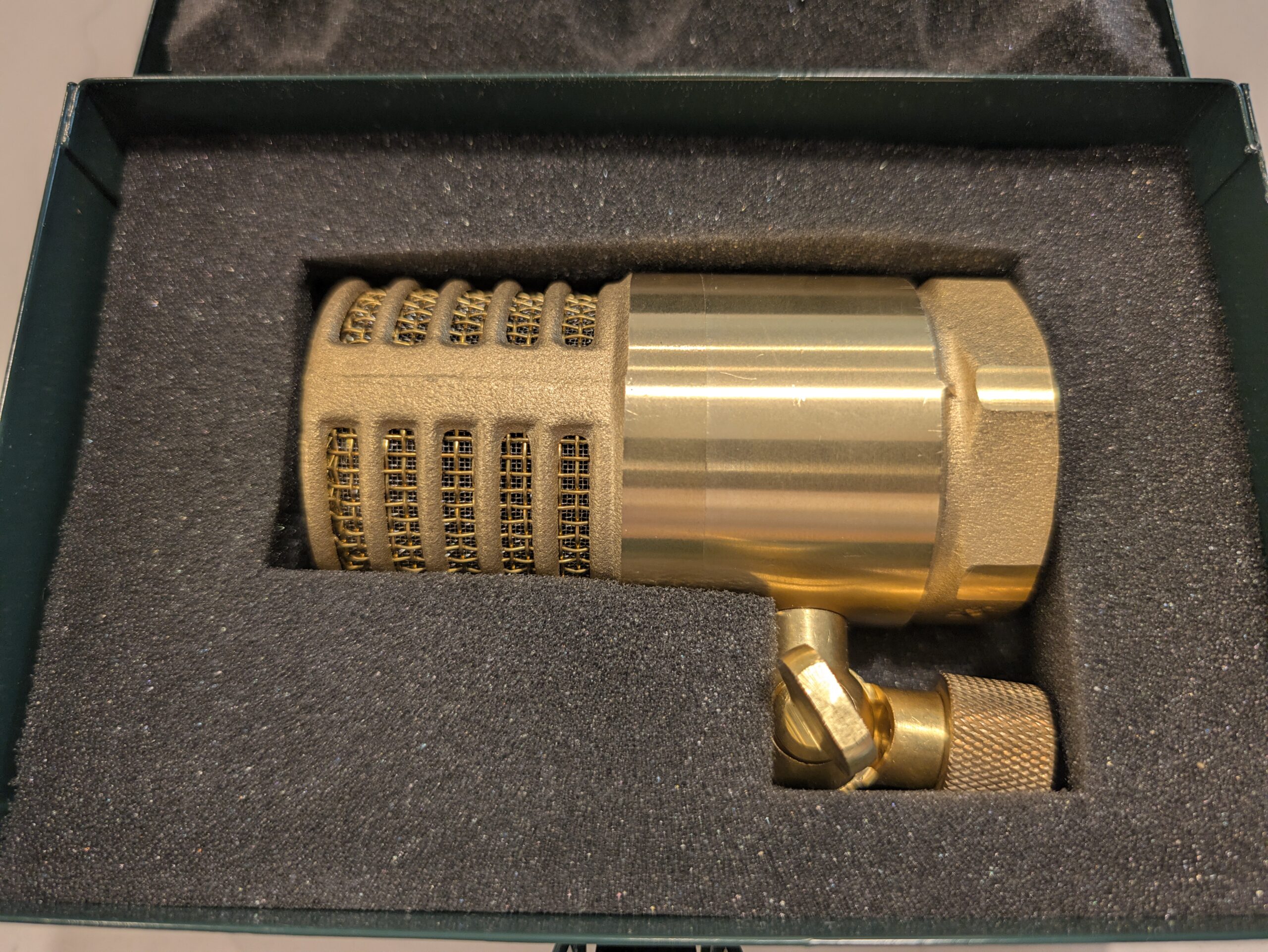
The outer cardboard carton is unremarkable. Inside, however, is a wonderful green metal box, with the look and feel of a small toolbox from the 1950s or 1960s. It reminded me of the boxes I used to find at garage sales as a kid, holding little electronics kits, parts, or test meters. The finish looks like enamel, although it may well be powder coating, and the box has a satisfying heft. It’s the sort of packaging you keep.
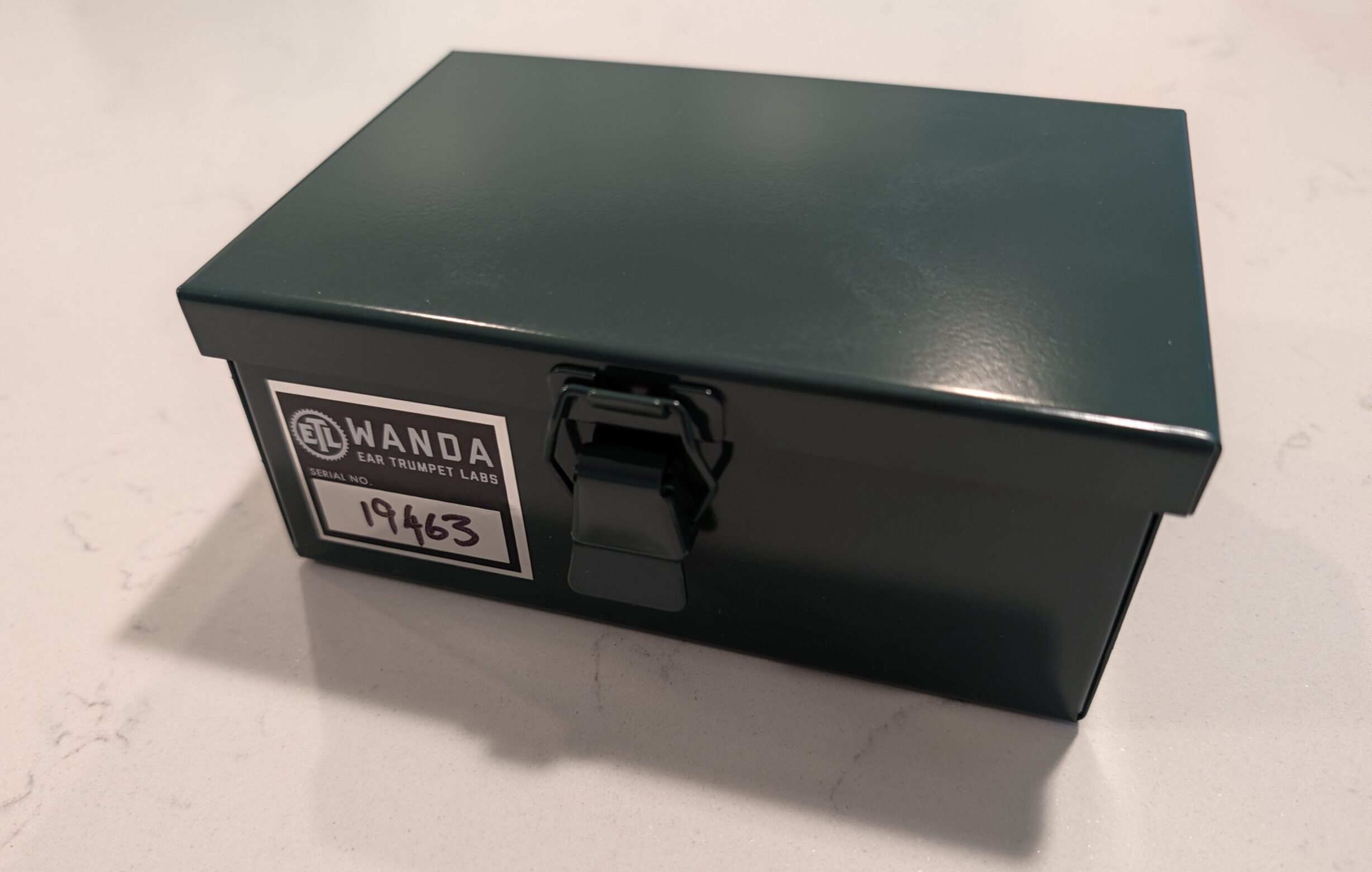
There is also an envelope containing information about the microphone, other Ear Trumpet Labs products, and basic instructions for people unfamiliar with phantom-powered microphones. That’s a sensible inclusion given the company’s popularity with live performers, including bluegrass musicians who may be more accustomed to traditional stage microphones.
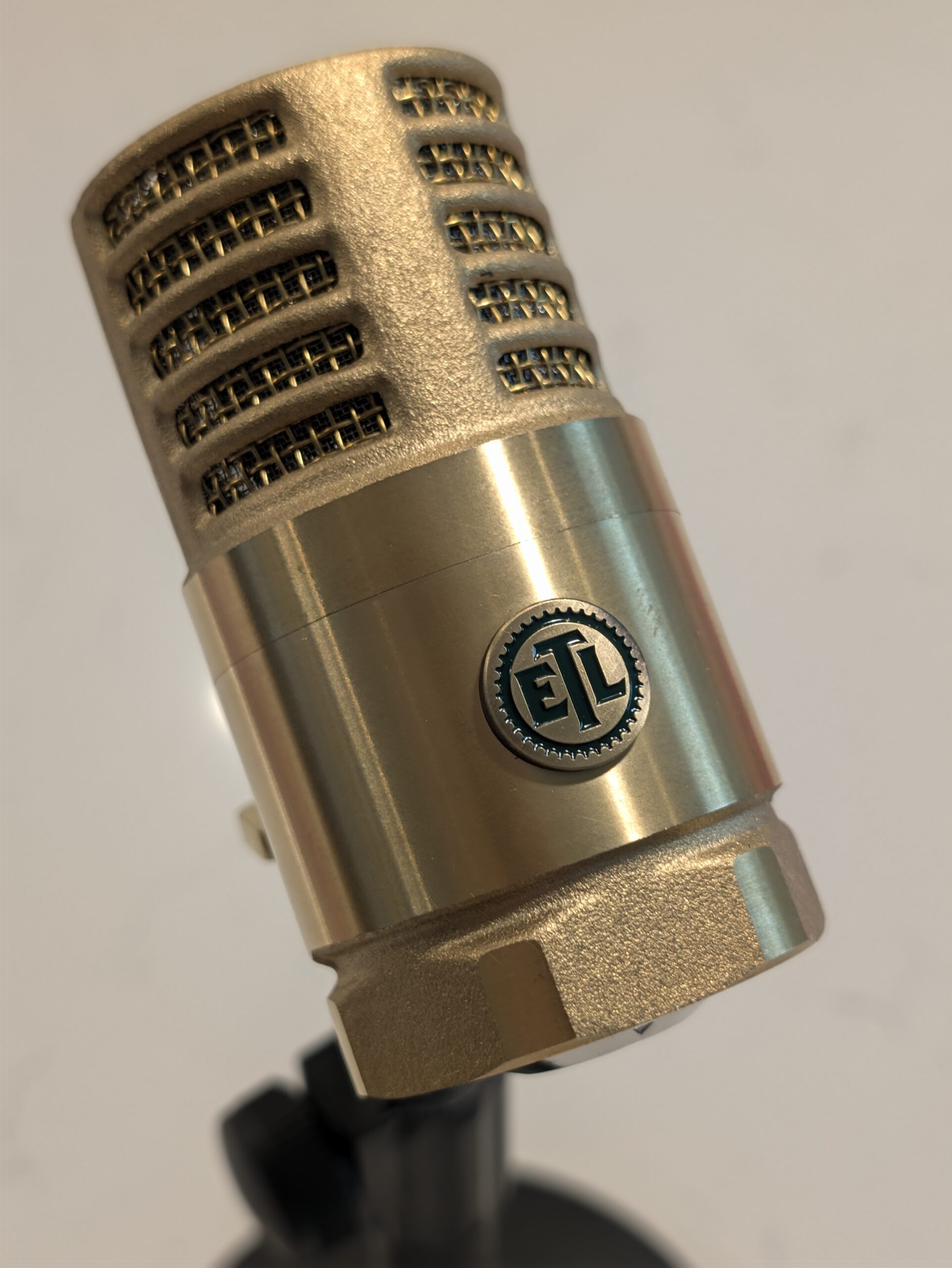
Lift the Wanda out of its fitted foam and the impression only improves. The brass finish is lustrous, the microphone feels reassuringly substantial, and the shape is almost endearing. You get the feeling that someone actually cared about how this thing was made.
That is increasingly unusual. So many products, from consumer electronics to automobiles, have become visually interchangeable. A Mercedes can look remarkably like a Hyundai, Honda, or Toyota. Against that backdrop, the Wanda has genuine personality.
Ear Trumpet Labs also makes its microphones in the United States. That isn’t to suggest that every electronic component is domestically manufactured; I certainly didn’t disassemble the review sample to find out. But the domestic manufacturing and hands-on approach are meaningful distinctions in a market where so much production has moved offshore.
So how does it sound?
Fortunately, the Wanda is more than an attractive object. What surprised me most is how little it resembles the sonic stereotype of an inexpensive condenser microphone. It isn’t bright or hyped. Instead, it has much of the smoothness I associate with a good dynamic microphone, such as an Electro-Voice RE20 or Beyerdynamic M88, with perhaps a suggestion of ribbon-like warmth.
That doesn’t mean it’s dark or closed-in. Quite the opposite: the Wanda sounds open, extended, and natural. It simply doesn’t insist on calling attention to the upper frequencies.
On vocals, there is a pleasing warmth and a little of what I might call a radio-announcer quality. Not the exaggerated, rumbling Don Imus sort of sound, but a clear, articulate, finished presentation. The microphone gives a voice some substance without making it seem artificially enlarged.
In front of instruments
For these listening sessions, I used both the API A2D, whose microphone preamp is essentially based on the classic API 312 design, and Soundtracs console microphone preamps. I tried the Wanda on vocals, bass drum, snare drum, guitar amplifier, and as a mono overhead above a drum kit. It proved useful in every one of those settings.
On my Gallien-Krueger 250ML guitar amplifier, it delivered a particularly appealing, natural sound—as dynamic as that rather compressed little amplifier can sound. It captured the character of the amp without adding an unwelcome edge.
On bass drum, the low-frequency extension was better than I expected from its appearance. I could imagine reaching for it in situations where I might otherwise consider a U47 FET, although that’s a suggestion about application rather than a claim that the two microphones sound alike.
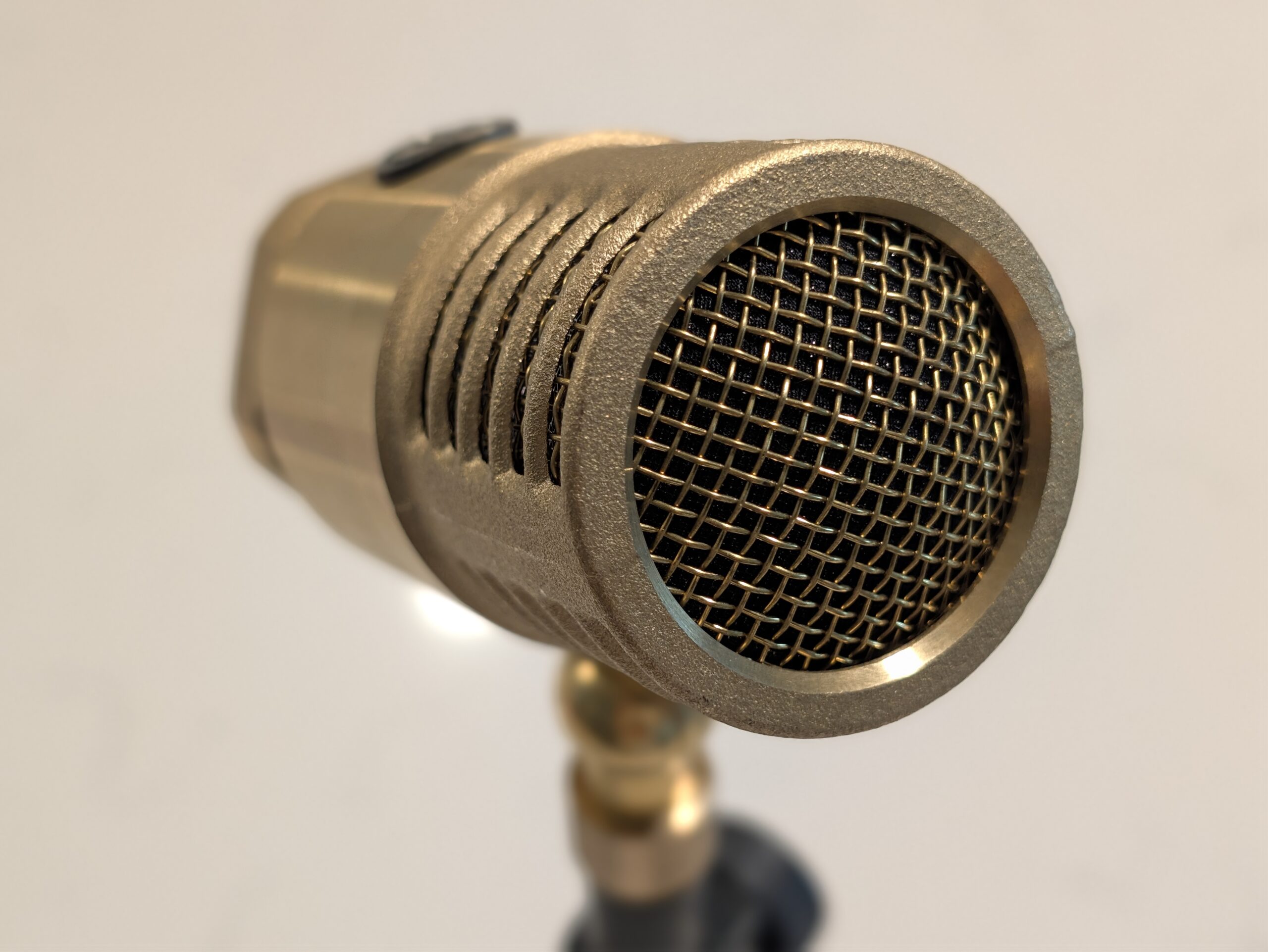
The Wanda actually looks a little like an Audio-Technica ATM25, and there is something of that microphone’s useful, well-balanced character in the sound as well. I recognize that the end-address form factor may influence my expectations, but the comparison kept coming to mind.
As a mono overhead above a drum kit, the result was surprisingly complete. The balance felt more finished than I would have predicted, without an aggressive emphasis on the cymbals. I’d be very curious to hear what a pair of Wandas could do as room microphones.
Warranty and long-term support
One final detail deserves mention: the warranty. Ear Trumpet Labs describes lifetime coverage for defects and internal electrical failures under normal use, and offers repairs for accidental damage at the cost of parts and shipping. The literature included with the microphone struck me as unusually accommodating about when and where it was purchased. I couldn’t establish whether coverage formally transfers to subsequent owners, so that point is worth confirming directly with the company. Even with that qualification, the commitment to long-term service is refreshing.
Conclusion
I enjoyed using the Wanda, and I found more places for it than I initially expected. Its sound is smooth, warm, open, and natural, without the excessive brightness that can make some condensers tiring. Its unusual appearance is an asset on camera, in a promotional photograph, or simply in a studio where you appreciate an object with some character.
The Wanda isn’t a bargain-basement microphone, but neither is it priced like an exotic collector’s piece. More importantly, it feels like a thoughtfully made product from people who care about what they’re building. It sounds good, looks fantastic, and is the kind of microphone you find yourself wanting to use. I’m interested to see what Ear Trumpet Labs comes up with next.