Microphone Reviews
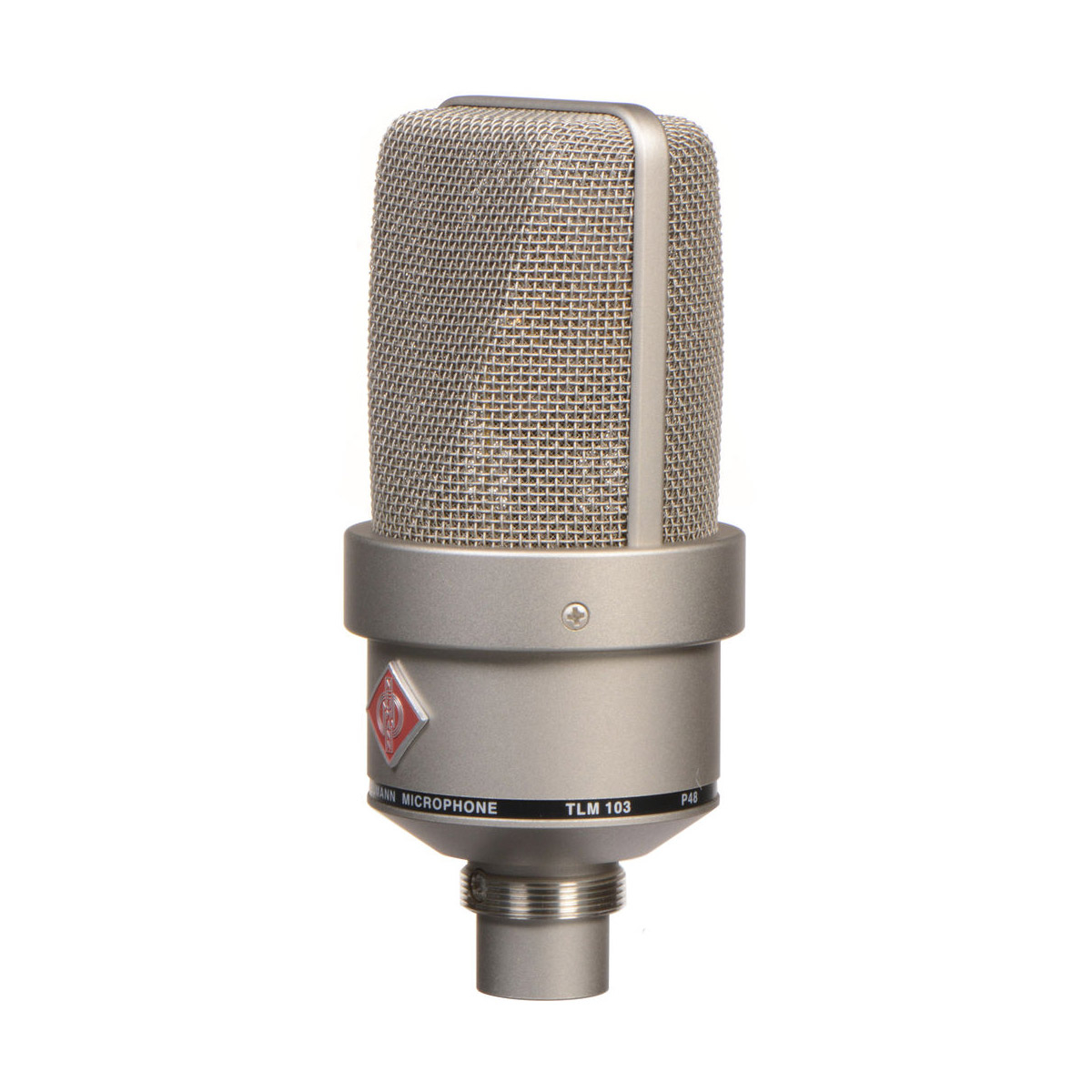
Neumann TLM 103: The Gateway Drug to Neumann
Manufacturer: Neumann
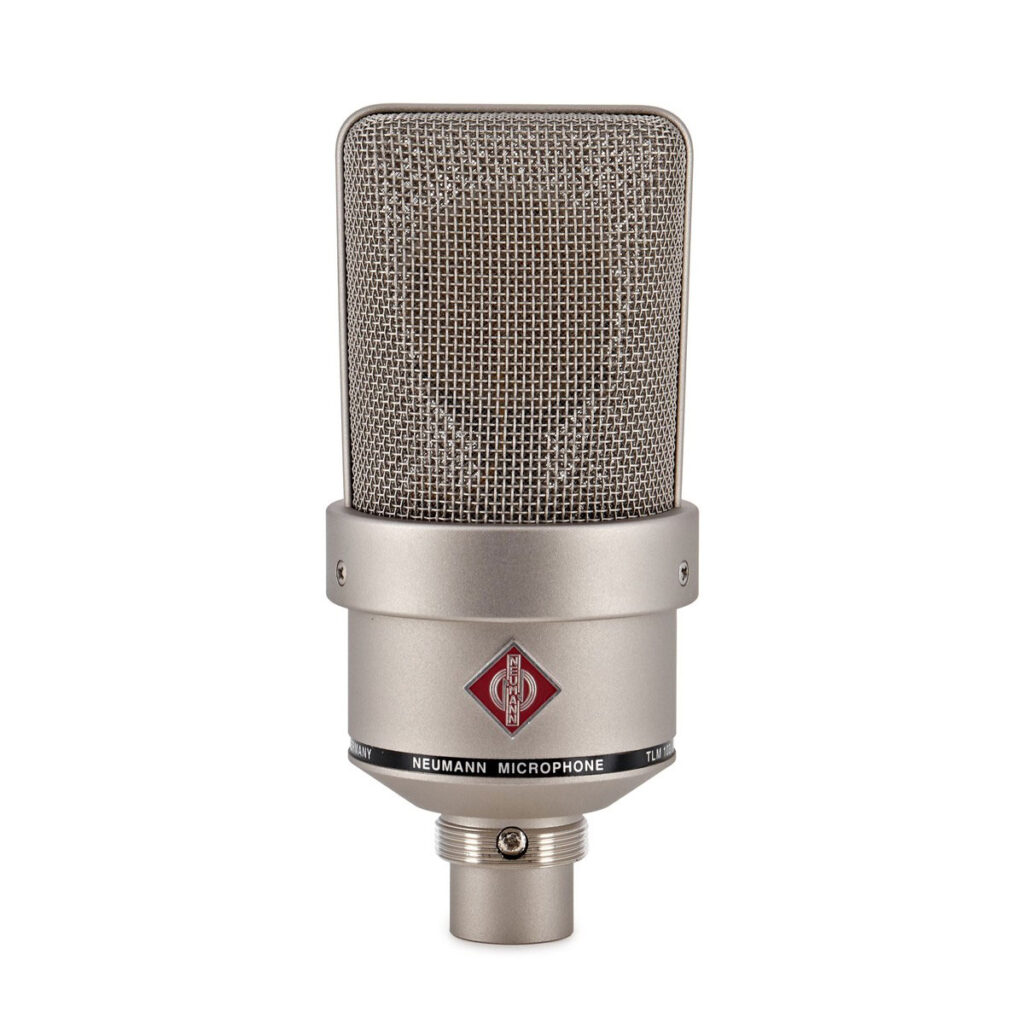
The Neumann TLM 103 is the gateway drug to Neumann.
This is where people start their Neumann addiction. They buy a TLM 103, discover how good it sounds, and before you know it, they’re looking at a U 87. Then perhaps a U 67. Maybe a U 47.
Eventually, they’re selling their house, their car, and possibly their children.
Now, I’m not saying they’re actually going to sell their children. But they might consider it. Particularly if somebody offers them a really nice vintage U 47.
All kidding aside, the TLM 103 is a terrific microphone.
Along with its smaller sibling, the TLM 102, it represents one of the more accessible ways of getting into the Neumann family. And while both are excellent microphones, the TLM 103 seems to be the one I encounter more frequently out in the field.
There’s good reason for that.
The TLM 103 is a large-diaphragm cardioid condenser microphone with a transformerless output stage. It has very low self-noise, plenty of output, and a sound that is unmistakably in the Neumann family.
It’s a wonderful vocal microphone, but it’s certainly not limited to vocals. Acoustic instruments, guitar amplifiers, voiceovers, and any number of other sources can benefit from it.
Is it a U 87?
No.
And it shouldn’t have to be. The U 87 is a different microphone with its own characteristics, and there are reasons people continue to spend considerably more money on one.
But the TLM 103 is a great-sounding microphone in its own right. It doesn’t need to pretend to be something else.
Unfortunately, there’s a problem.
A gigantic, gigantic, gigantic problem.
And yes, I repeated gigantic three times on purpose.
Counterfeits.
There are so many counterfeit Neumann TLM 103 microphones floating around that it’s become a serious concern. In fact, I can’t think of another studio microphone that I’ve encountered with quite the same reputation for being counterfeited.
And these aren’t necessarily crude imitations that anybody with functioning eyesight can identify.
The counterfeiters have gotten better. Much better.
Some of these microphones look remarkably convincing from the outside. The finish, the grille, the logo, the packaging—everything can appear legitimate until you start examining the details.
An experienced technician may be able to identify differences in the internal construction, components, capsule, or circuit board. And, of course, there’s the sound.
A counterfeit microphone may look like a Neumann, but that doesn’t mean it sounds like one.
The problem is that the person buying their first TLM 103 may have no idea what a genuine one is supposed to sound like. They may think they’re getting the famous Neumann sound when they’re actually getting something entirely different.
And that’s particularly unfortunate because this is precisely the sort of microphone someone might save up for.
Where you buy it matters
This is one of those situations where I strongly recommend buying from an authorized Neumann dealer.
Not somebody who claims to be an authorized dealer. An actual authorized dealer.
Sweetwater, Full Compass, B&H, and other established professional audio retailers are obvious places to start. Specialty dealers such as Sonic Circus or Retro Gear may also be worth investigating, provided you confirm their current authorization and the provenance of the particular microphone.
And I would be especially careful with marketplace listings.
Amazon, for example, historically used a fulfillment practice called inventory commingling, in which identical products from different sellers could be used interchangeably to fulfill orders. Amazon announced that it was ending that practice in March 2026, which is a welcome change.
But the larger problem remains: a familiar retail website doesn’t necessarily mean that every third-party seller on it is an authorized source of genuine Neumann microphones.
You need to know who is actually selling you the microphone.
And if somebody is offering you a brand-new TLM 103 for a fraction of the normal price, I’d suggest exercising considerable skepticism.
There are bargains in professional audio. There are also people who would be delighted to sell you a $75 microphone with a Neumann badge on it.
The real thing is worth having
I don’t want the counterfeit problem to overshadow the microphone itself, because the genuine TLM 103 is an excellent product.
It’s a microphone that can serve someone for decades. You can buy one for a home studio and continue using it long after you’ve acquired considerably more expensive equipment.
And that’s one of the things I appreciate about Neumann. Even its more accessible microphones are serious professional tools.
The TLM 103 isn’t the cheapest way to record a vocal, and it certainly isn’t the only good microphone in its price range. But it is a genuinely fine microphone with a lot to recommend it.
Just make absolutely certain you’re buying a real one.
Because there’s nothing quite like saving up for your first Neumann, opening the box, and discovering that your expensive new microphone is a fugazi.
And if you do get a genuine one, be careful.
Before long, you’ll be looking at a U 87.
Then a U 67.
Then you’ll start wondering how much your car is worth.
The verdict: The Neumann TLM 103 is a terrific, versatile condenser microphone and a worthy introduction to the Neumann family. Its biggest drawback isn’t the sound or the price—it’s the risk of buying a counterfeit. Purchase from a verified authorized dealer, and don’t let an implausibly cheap offer tempt you.
Danger, Will Robinson.