Plug-In Reviews
Akai Rhythm Wolf Review: This Wolf Was a Dog
Manufacturer: Akai
In this article
Everyone loves Akai. Everyone loves analog drum machines.
So why does everyone hate the Rhythm Wolf?
That’s easy. Because it sucks!
Seriously, Akai has always been cool. From the 1212 (hardly) PortaStudio — yes, I know PortaStudio is a Tascam trademark — to the 1214 and the Akai ADAM, they’ve always managed to make equipment that was a little different, a little unusual, and generally pretty interesting.
And it’s not unfair to say that the MPC has been one of the dominant forces in hip-hop and dance music for the better part of three decades. Akai knows a thing or two about making drum machines.
So when I first heard about the Rhythm Wolf, I figured this was going to be great.
Big, fat pads. That great Akai feel. Real analog sounds!
What could possibly go wrong?
Well, apparently, just about everything.
All Bark, No Bite
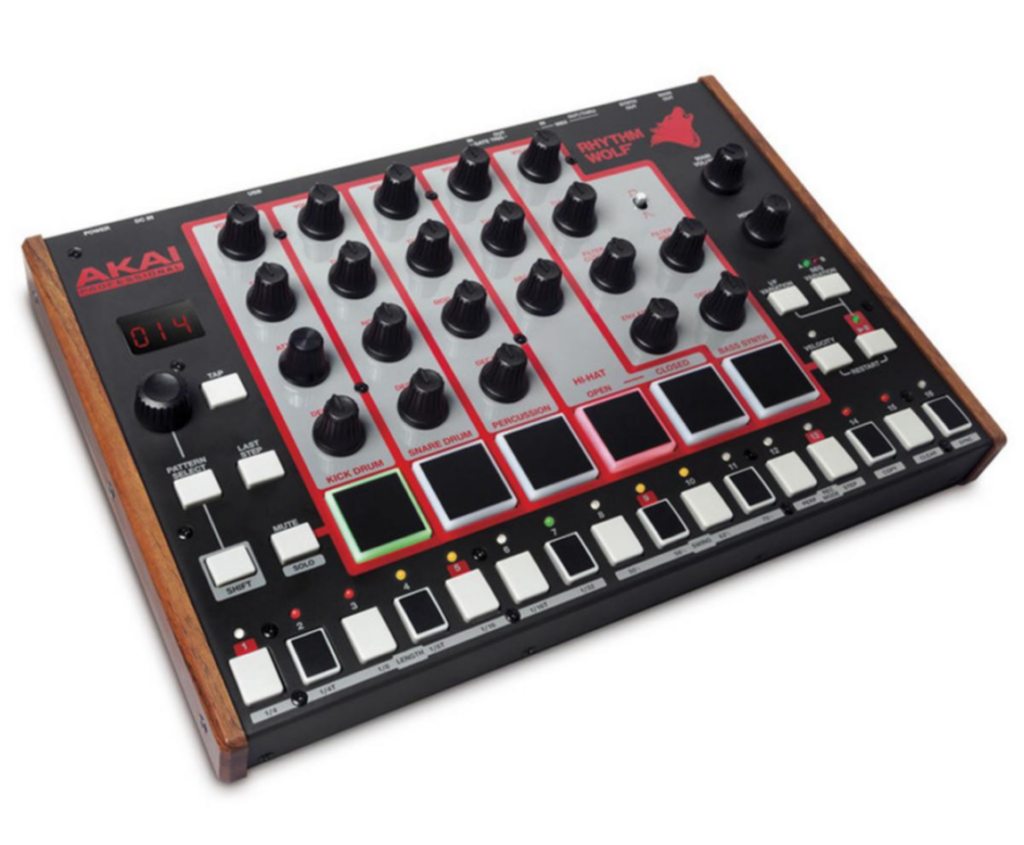
The Rhythm Wolf looked fantastic in the promotional photographs. It had that chunky, purposeful appearance that makes you think you’re buying a serious piece of equipment.
And the promise of genuine analog drum synthesis from Akai was pretty compelling.
Unfortunately, the reality was considerably less exciting.
The first problem was the sound.
For an analog drum machine, the Rhythm Wolf sounded remarkably thin. In fact, I’ve heard plenty of digital drum machines that sounded considerably fatter and more convincing.
Now, I’m certainly not one of those people who thinks analog automatically means better. But when you’re selling an analog drum machine, it seems reasonable to expect some of the punch, weight, and character that make people want analog drum machines in the first place.
The Rhythm Wolf just didn’t deliver.
The kick lacked authority, the other sounds weren’t particularly inspiring, and the whole thing seemed to have an oddly undernourished quality.
It was almost impressive how little excitement Akai managed to extract from a box full of analog circuitry.
Tuning Out
Then there was the tuning.
The tuning behavior of the pitched elements was notoriously bad. To Akai’s credit, this was addressed in a firmware update, but it’s the sort of thing that really shouldn’t have made it out the door in the first place.
The operating system wasn’t particularly intuitive, either. It wasn’t that the Rhythm Wolf was impossibly complicated. It was more that the workflow seemed unnecessarily convoluted for a machine that should have been about immediate, hands-on fun.
A drum machine like this should make you want to sit down and start making beats.
Instead, I found myself wondering why I was bothering.
Bigger Isn’t Better
One other surprise was the physical size.
The Rhythm Wolf was considerably larger than it appeared in the photographs. I don’t know exactly what I was expecting, but when I got it out of the box, I remember thinking, Wow, that’s a lot of real estate for not very much sound.
To be fair, Akai did include some clever features, and the machine offered a generous assortment of outputs. There were certainly some interesting ideas in the design.
But interesting ideas don’t necessarily add up to an interesting instrument.
And no amount of connectivity can make up for sounds that you don’t particularly want to use.
Maybe It Needed to Be Broken
Looking back, I wonder whether the Rhythm Wolf might have been a good candidate for circuit bending.
After all, if a machine doesn’t sound particularly good doing what it was designed to do, perhaps the answer is to make it do something it was never designed to do.
In fact, I’m tempted to rush over to YouTube and see whether anyone actually did that.
Maybe there’s a wonderfully deranged Rhythm Wolf out there somewhere, producing the sort of nasty, unpredictable noises that the original should have been making all along.
That might actually be worth hearing.
Final Thoughts
I’ve owned a lot of equipment over the years, and the Rhythm Wolf holds the distinction of having one of the shortest intervals between purchase and resale.
I bought it, tried to like it, realized I wasn’t going to like it, and got rid of it.
That was pretty much the entire relationship.
Akai has made some genuinely wonderful and influential equipment. The company deserves enormous credit for the MPC and for decades of interesting, sometimes unconventional product design.
But every manufacturer has an occasional misfire.
The Rhythm Wolf was one of Akai’s.
This wolf was a dog.