Accessories Reviews
AKG K240 Studio Review: A Pale Shadow of a Studio Classic
Manufacturer: AKG
In this article
Almost 15 years ago, I was in China working with a company that was attempting to resurrect a famous loudspeaker brand that had fallen on hard times. Part of the project involved investigating headphones, particularly earbuds, so we visited several manufacturers in the Shenzhen area.
One of these was a very nicely run factory founded by a distinguished older gentleman who was also an engineer. He was clearly proud of the operation, and with good reason. The facility was impressive, and he took us through the manufacturing areas and laboratories, including the destructive testing department.
That’s where I noticed something interesting.
There was a pair of headphones being subjected to mechanical torture testing. As I recall, the machine was repeatedly flexing the headband assembly to determine how much punishment it could withstand before something broke.
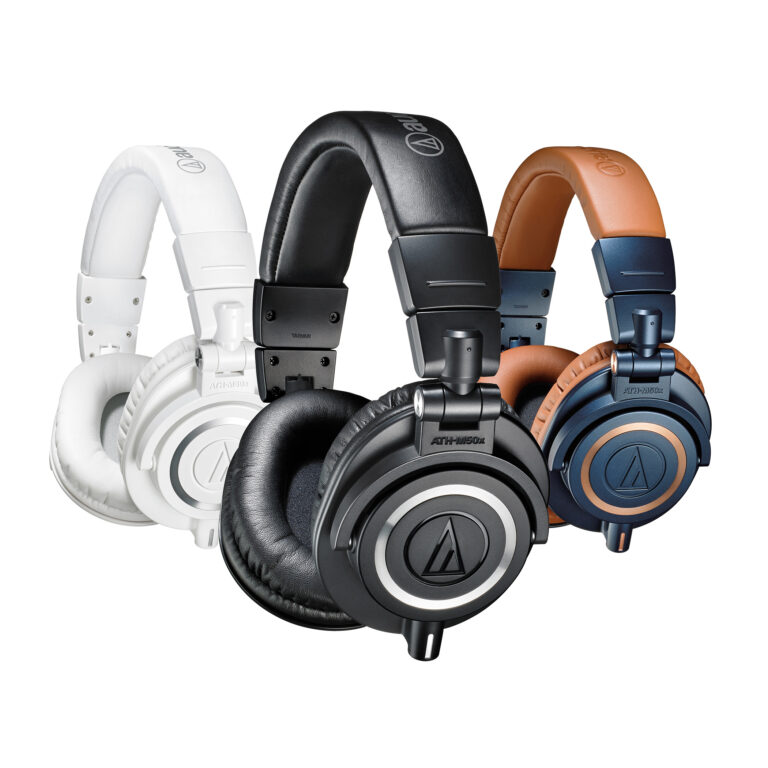
And those headphones looked suspiciously like AKG K240s. I’ve also discussed the K240’s legacy in my Audio-Technica ATH-M50x review.
I recognized them immediately. After all, I’d been using K240s for decades.
I asked whether they were testing the AKGs as a reference product.
The gentleman looked at me and explained, essentially, “No, no, no. You don’t understand. We make these here.”
Well, that was news to me.
It was the first time I realized that the AKG K240 was no longer being manufactured in Austria.
How Do You Make a Classic Headphone So Cheap?
Fast-forward to 2026.
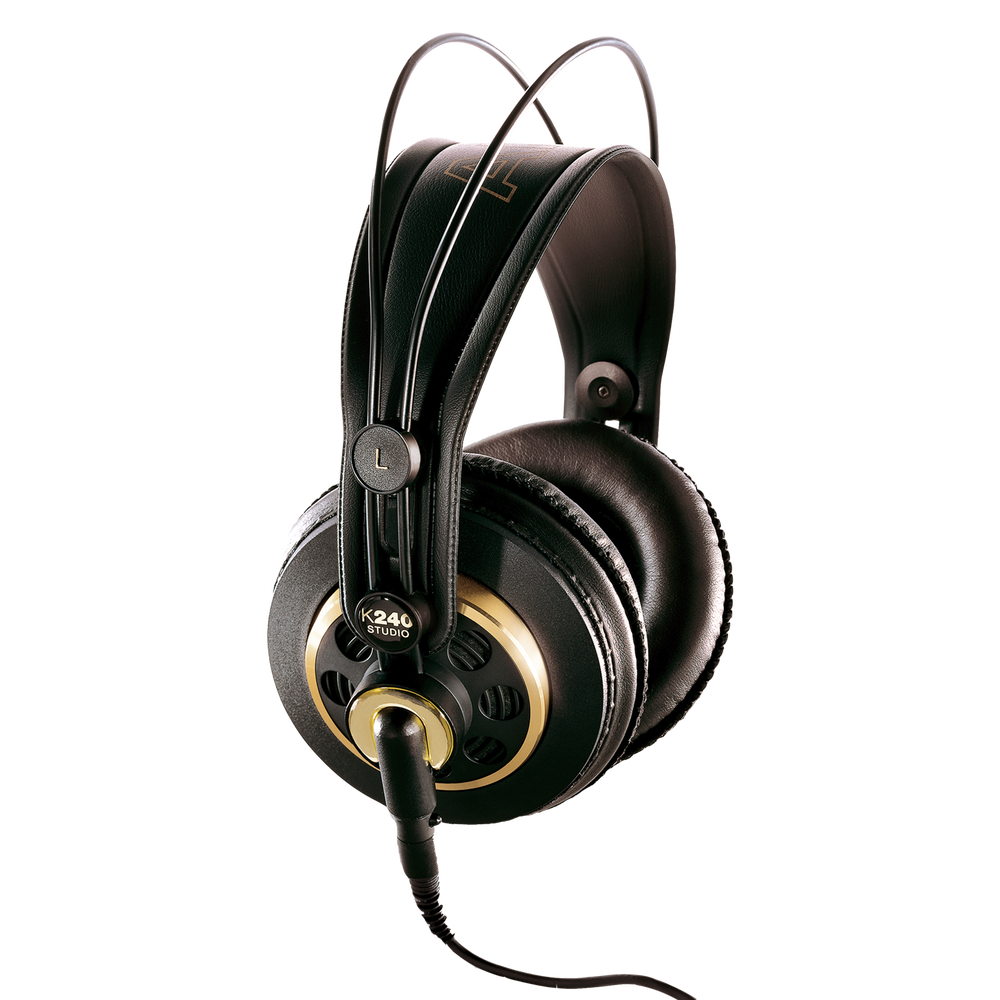
I’m looking at Amazon, and a brand-new pair of AKG K240 Studio headphones is selling for $49.24.
Forty-nine dollars and twenty-four cents.
The K240 MKII is also available, at $87.66 on Amazon. It’s a little more expensive, but it shouldn’t be confused with the original Austrian-made K240 Monitor.
I remember when K240s cost substantially more than that, and we’re talking about actual dollars, not inflation-adjusted dollars. If you account for inflation, the difference becomes even more extraordinary.
Period prices help put this into perspective. A 1987 advertisement offered the K240 Monitor for $79.95 against a $100 list price. A 1989 equipment directory listed the Monitor at $150. In 2003, a BSW advertisement listed the newer K240 Studio at $99 against a $159 list price, and a 2006 catalog advertised the Studio at $99 against a $150 list price.
These are different generations of the K240 family, not identical headphones: the older Monitor was a 600-ohm model, whereas the Studio has 55-ohm drivers and a detachable cable. But those prices still illustrate how dramatically the market position of the K240 has changed.
Now, everybody knows that manufacturing in China can be considerably less expensive than manufacturing in Austria.
But how do you take a product with this history, move production halfway around the world, and sell it for so little?
There’s a very simple answer.
You don’t make the same product anymore.
Same Name, Different Headphones
I still have several of the original Austrian-made K240s, including the professional versions, so I’m not relying on some nostalgic recollection of what they were like.
I’ve compared the old headphones with the modern ones.
They don’t feel the same.
They don’t smell the same.
They don’t look the same.
And they certainly don’t sound the same.
The original K240 was a beautifully made headphone. It wasn’t necessarily the most accurate headphone available, and there were better choices even back then, but it had a very agreeable character.
The sound wasn’t aggressively hyped. It was comfortable to listen to for extended periods, and the headphones were reasonably durable, considering their lightweight construction.
They were a studio standard throughout the 1980s and well into the 1990s. You saw them everywhere.
Some engineers preferred the Sony MDR-7506 and related models. Personally, I always found the Sonys excessively bright. The K240 was much more to my liking.
And there was something satisfying about the construction of the old AKGs. They felt like professional equipment made by a company that took pride in what it was building.
The modern K240 Studio simply doesn’t give me that impression.
What Went Wrong?
There’s a term that’s become popular for what happens when companies gradually make their products and services worse while continuing to trade on their established reputations.
It’s called enshittification.
And I think the modern AKG K240 is an excellent example.
The name is the same. The general appearance is the same. The product still carries the visual identity of a headphone that earned its reputation over decades.
But the substance has changed.
This isn’t an indictment of Chinese manufacturing. I’ve visited excellent factories in China, including the one that was making these headphones. The people running that operation clearly knew what they were doing.
The problem isn’t where the headphones are made.
It’s what the manufacturer has chosen to make.
You can build excellent products in China, just as you can build mediocre products in Europe or the United States. Manufacturing quality is ultimately a matter of specifications, materials, engineering, and what the company is willing to spend.
And somewhere along the way, the K240 became a much cheaper product.
Unfortunately, it also became a much less satisfying one.
A Legacy Worth Preserving
What bothers me most is that the K240 wasn’t some disposable consumer product.
It was a genuine studio classic.
Generations of engineers, musicians, and producers used these headphones. They weren’t perfect, but they had a recognizable sound, a distinctive design, and a well-earned place in professional audio history.
AKG could have preserved that legacy by continuing to build the K240 to the original standard, even if that meant charging considerably more money.
Instead, we have a headphone that looks like a K240 and carries the same name, but doesn’t deliver the experience that made the original worth owning.
And that’s a shame.
The Verdict
At less than $50, the modern AKG K240 Studio is certainly inexpensive.
But inexpensive isn’t the same thing as good value.
I would much rather pay more for a headphone that preserves the qualities that made the original K240 desirable than buy a cheaper imitation of its former self.
If you’ve never experienced the original Austrian-made K240, you might find the current model perfectly acceptable. But if you know what these headphones used to be, the difference is disappointing.
The modern K240 Studio is a pale shadow of a once-great product.
My recommendation? Look for something better.