Microphone Reviews
AKG C12 VR Review: The Worst Expensive Microphone I’ve Ever (Briefly) Owned
Manufacturer: AKG
In this article
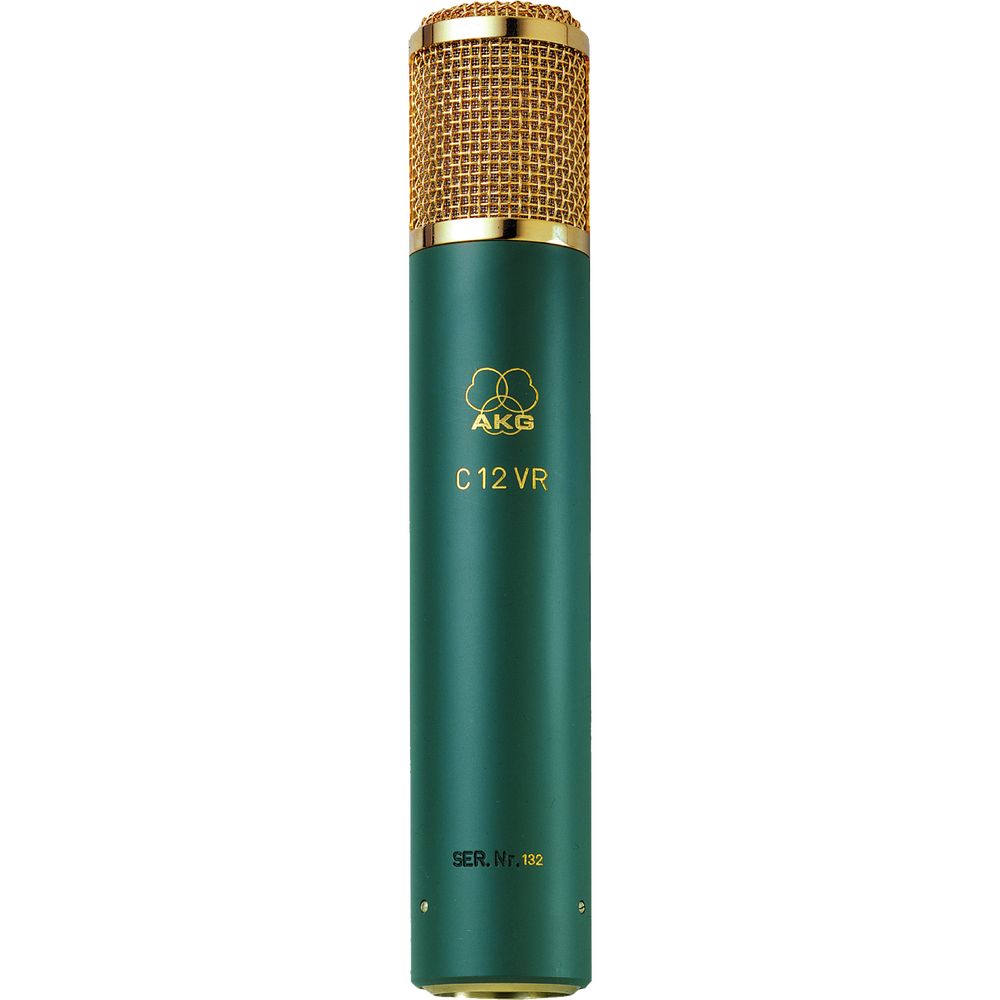
The AKG C12 VR is the worst expensive microphone I’ve ever (briefly) owned.
And considering how many microphones I’ve owned over the years, that’s saying something.
I purchased mine about five years ago, knowing that opinions on the C12 VR were mixed. Some people seemed to like it, while others were considerably less enthusiastic. I decided to give it a chance.
I believe I paid somewhere north of $6,000 for it. The current advertised retail price is $8,649, which makes this a very serious investment in a microphone.
For that kind of money, I expect exceptional sound, excellent construction, and first-rate manufacturer support.
Unfortunately, I got none of those things.
First Impressions
I’ll start with the appearance.
I think the C12 VR is ugly.
That’s entirely subjective, of course, and I wouldn’t hold it against a microphone if it sounded wonderful. There are plenty of unattractive pieces of audio equipment that I absolutely love.
But once I took the C12 VR out of its box, I wasn’t particularly impressed with the construction, either.
It just seemed a little half-assed.
That’s probably not the most technical description, but it’s the one that comes to mind.
For a microphone costing this much money, I expected something that felt more substantial and carefully executed. Instead, the whole thing struck me as rather ordinary.
There was also something about the country-of-origin labeling that bothered me.
The C12 VR I received was made in Poland, not Germany, and the only indication was a tiny peel-off sticker on the microphone.
Now, I have absolutely nothing against Polish manufacturing. Quite the contrary. Poland has some excellent manufacturers. Mayones makes wonderful guitars, and PSP Audioware is another example of a Polish company producing excellent professional audio products.
If you’re going to manufacture something in Poland, be proud that it’s made in Poland.
Don’t treat the country of origin like something you’d rather people didn’t notice.
On an expensive microphone carrying a historic European brand name, that little removable sticker didn’t exactly inspire confidence.
Still, appearance and construction are secondary considerations if a microphone sounds exceptional.
Unfortunately, that wasn’t going to save the C12 VR.
Mediocre Sound and an Unacceptable Noise Floor
From the beginning, I found the sound thoroughly unimpressive.
It was thin, uninspiring, and simply didn’t have the character or authority I expected from a microphone in this price category.
And then I noticed something else.
There was a low-level frying sound in the background.
It wasn’t particularly loud, but it was definitely there, and once I noticed it, I couldn’t ignore it.
This wasn’t the sort of noise I’d consider acceptable from an inexpensive microphone, much less one costing thousands of dollars.
My first suspicion was that the tube might be defective.
That’s hardly an unreasonable possibility with a tube microphone, and replacing a tube is generally a straightforward proposition.
So I contacted AKG.
That turned out to be another disappointment.
AKG Service: A Remarkably Bad Experience
I’d purchased the microphone through an authorized dealer, so there was no question about where it came from.
I explained the noise problem to AKG’s service department and suggested that the microphone might have a defective tube.
I asked whether they could simply send me a replacement tube.
No.
Apparently, AKG couldn’t send me a replacement part. The microphone had to go back to the factory for service.
Fine. No problem.
They provided a return shipping label, and I sent the microphone back.
At least a couple of weeks passed before I received it again.
And when I plugged it in, it sounded exactly the same.
The frying noise was still there.
I have no idea whether AKG actually replaced the tube, adjusted something, or simply sent the microphone back without correcting the problem. All I know is that whatever they did, it didn’t fix it.
I even sent them an audio recording demonstrating the noise.
To make the comparison meaningful, I used the same recording chain and substituted another microphone. I don’t remember exactly which microphone I used; it may even have been another tube microphone.
But the difference was unmistakable.
The C12 VR had an atrocious noise floor by comparison.
This wasn’t some imaginary problem or a subtle difference that required extraordinary listening skills to detect. It was plainly audible.
And AKG’s service department had returned the microphone to me in essentially the same condition in which I’d sent it.
For a product in this price category, that’s unacceptable.
Frankly, the service was hot garbage.
At that point, I’d had enough. I ended up returning the microphone.
I wasn’t about to keep a microphone costing thousands of dollars that sounded mediocre, had an obvious noise problem, and had already been back to the manufacturer without being repaired satisfactorily.
A Premium Price Without Premium Performance
I could probably forgive mediocre sound if the microphone were inexpensive.
I could overlook less-than-impressive construction if the microphone delivered something sonically remarkable.
And I could tolerate an occasional defective component if the manufacturer made a genuine effort to correct the problem.
But the C12 VR failed on all three counts in my experience.
The sound was mediocre. The construction didn’t impress me. The noise floor was unacceptable. And the manufacturer’s service response was thoroughly unsatisfactory.
What exactly was I paying all that money for?
The AKG name?
That isn’t enough.
There was a time when AKG produced some genuinely extraordinary microphones, and I still own vintage examples that I regard very highly.
But my experience with the C12 VR did absolutely nothing to convince me that the company was maintaining the standards I associated with its earlier professional products.
In fact, it had precisely the opposite effect.
The Competition Has Moved On
And today, the argument for spending this kind of money on a C12 VR seems even weaker.
I’m not even talking about the inexpensive clone microphones, some of which have become remarkably good.
I’m talking about the many excellent microphones being produced by genuine enthusiast companies. These are people who care deeply about microphone design, who are painstakingly recreating the classics while also developing new designs and pushing the technology forward.
There are manufacturers building extraordinary microphones because they’re passionate about microphones, not simply because they own the rights to a famous name.
With so many choices available, I think you’d have to be out of your mind to spend this kind of money on a microphone as mediocre as the C12 VR I owned.
At this price level, you should be getting something truly special.
I certainly didn’t.
The Verdict
I would never spend serious money on another AKG product after my experience with the C12 VR.
That’s not to say every C12 VR sounds like the one I owned, or that every customer will have the same experience with AKG service.
Some people apparently like these microphones, and perhaps they’ve had better luck than I did.
But I can only review the microphone I actually purchased and used.
And mine was a tremendous disappointment.
If you’re contemplating spending thousands of dollars on a C12 VR, my advice is simple: listen to the actual microphone you’re going to purchase, evaluate its noise floor carefully, and make sure you understand what kind of service support you’ll receive if something goes wrong.
More importantly, look at what the smaller, specialist microphone manufacturers are producing today. There’s a tremendous amount of talent and innovation in that market, and I can think of far better places to spend this kind of money.
Personally, I’d look elsewhere.