Microphone Reviews
Audix D2 Review: More Than Just a Rack Tom Microphone
Manufacturer: Audix
In this article
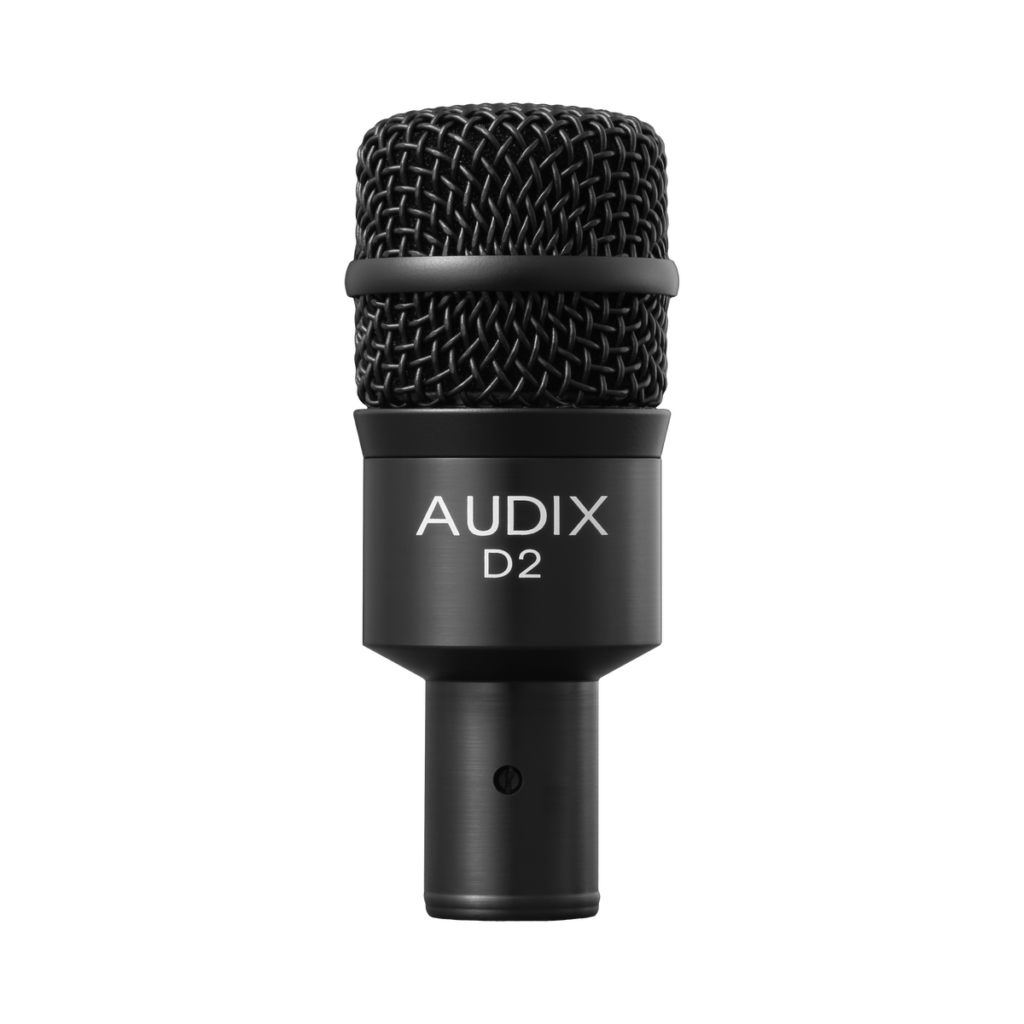
The Audix D2 is my microphone of choice when it comes to recording small rack toms.
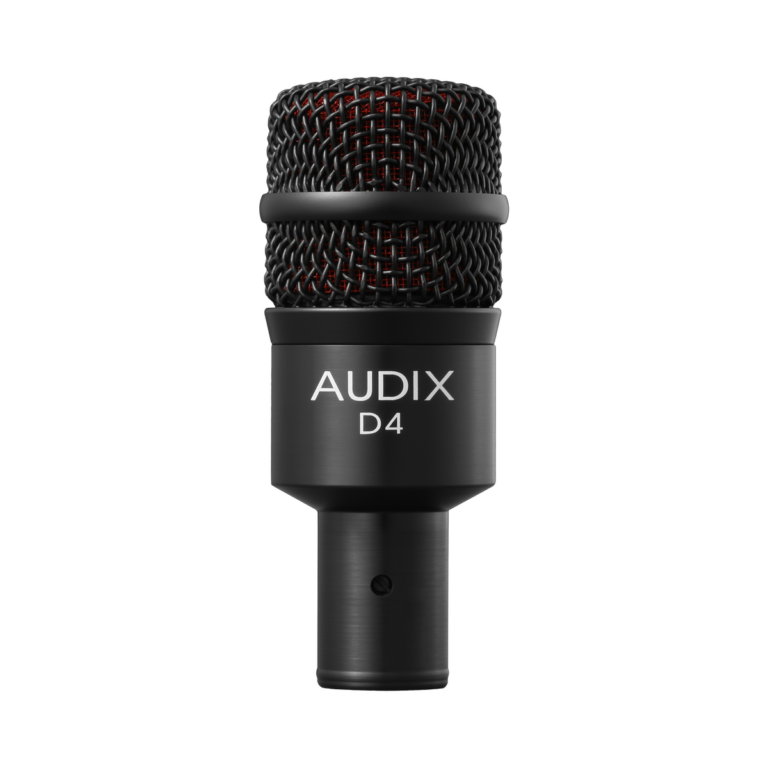
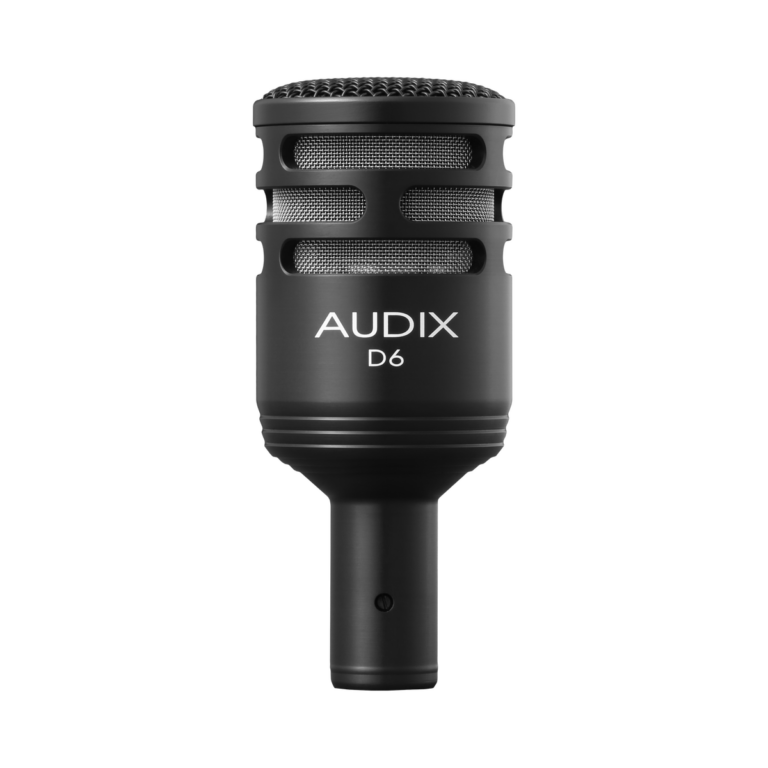
Like its bigger brothers, the D4 and D6, the D2 is built to an exceptionally high standard. It’s rugged, road-ready, nicely sized, nicely finished, and made in the United States.
And, most importantly, it sounds great.
Audix has done a particularly good job with this family of microphones. Each has its own strengths, and while there’s certainly some overlap between them, they complement one another beautifully.
For kick drums, I generally reach for the D6. For floor toms, it’s the D4. And for smaller rack toms, the D2 is my first choice.
But the D2 has a few other tricks up its sleeve.
Rack Toms and Bongos
The D2 is particularly well suited to rack toms. It’s compact enough to position easily around a drum kit, and its frequency response works very nicely with the sound of smaller toms.
It captures the attack of the drum without emphasizing an excessive amount of high-frequency content, while retaining enough body to make the drum sound substantial.
I’ve also had excellent results using D2s on bongos.
A pair of them can be particularly effective if you’re looking for a stereo image. You can position one for each drum and capture a nice sense of separation.
Alternatively, a single D2 positioned a little farther away can work very well if you want a more integrated sound from the pair of drums.
It’s a useful microphone for this application, and one that I think deserves more consideration than it generally receives.
A Secret Weapon for Snare Drums
One application that people don’t necessarily associate with the D2 is snare drum recording.
And that’s unfortunate, because the D2 can be a terrific snare microphone when you’re looking for a particular kind of sound.
The D2 is relatively dark.
That’s not a criticism. In fact, it’s one of the things I particularly like about it.
If you’re recording a snare drum and you’re looking for that thuddy, somewhat muted 1970s sound, the D2 may be exactly what you want.
Not every snare drum needs to sound bright, sharp, and aggressive.
Sometimes you want something with more body and less high-frequency snap.
The D2 can give you that sound without requiring you to start carving away frequencies with an equalizer.
And I generally prefer getting the sound I want from the microphone in the first place rather than trying to manufacture it afterward.
Guitar Cabinets: Sometimes Darker Is Better
Another application where I’ve found the D2 particularly useful is recording guitar cabinets.
There are guitar players who seem to believe that the more high frequencies they can get out of an amplifier, the better.
I don’t necessarily agree.
Sometimes you have a guitar cabinet that sounds excessively bright, or a guitarist who insists on a sound with far more high-frequency content than you really want in the recording.
You can certainly deal with that using equalization.
But why bother if you can select a microphone that naturally produces a more appropriate tonal balance?
That’s where the D2 can be very useful.
Its relatively dark character can help tame an excessively bright guitar cabinet without requiring extensive EQ.
You simply position the microphone, listen to the result, and you may find that you’ve already solved the problem.
It’s not necessarily the microphone I’d choose for every guitar cabinet, but when I want to reduce high-frequency emphasis, it’s a very useful option to have available.
Transient Response and Capsule Design
One characteristic that seems consistent throughout the Audix D-series is excellent transient response.
The D2 is no exception.
I’ve always been impressed with the way these microphones reproduce the initial attack of percussion instruments.
I suspect some of that performance has to do with Audix’s capsule technology.
Audix uses its proprietary VLM diaphragm design, and I think the results speak for themselves.
Whether that technology is inherently superior to what other manufacturers are doing is something that would require more controlled comparisons to establish.
But based on my experience using these microphones, Audix has clearly done something right.
The transient response is excellent, and the microphones have a way of delivering a very usable sound without requiring a great deal of corrective processing.
Build Quality and Value
As with the D4 and D6, the D2 is a thoroughly professional microphone.
It’s well built, compact, easy to position, and designed to withstand the sort of treatment that microphones inevitably receive in studios and on the road.
I also appreciate that Audix continues to manufacture these microphones in the United States.
Considering the quality of construction and the performance, I think the D2 is very reasonably priced.
It’s the kind of microphone you can buy with confidence, knowing that it’s going to remain useful for many years.
And unlike some specialized microphones that only seem to work particularly well on one instrument, the D2 has enough versatility to justify having several in your collection.
The Verdict
The Audix D2 is my first choice for smaller rack toms, but its usefulness extends well beyond that application.
It’s excellent on bongos, particularly when used as a stereo pair, and its darker tonal character makes it an interesting alternative for snare drums and guitar cabinets.
If you’re looking for a thuddy 1970s snare sound, or trying to tame an excessively bright guitar amplifier without resorting to equalization, the D2 is well worth trying.
Like the D4 and D6, it’s beautifully made, sensibly priced, and delivers excellent performance.
It’s a safe choice for anyone assembling a professional microphone collection.
And it’s one of those microphones that I think becomes more useful the longer you own it.
Highly recommended.