Microphone Reviews
Audix D6 Review: The Kick Drum Microphone That Changed Everything
Manufacturer: Audix
In this article
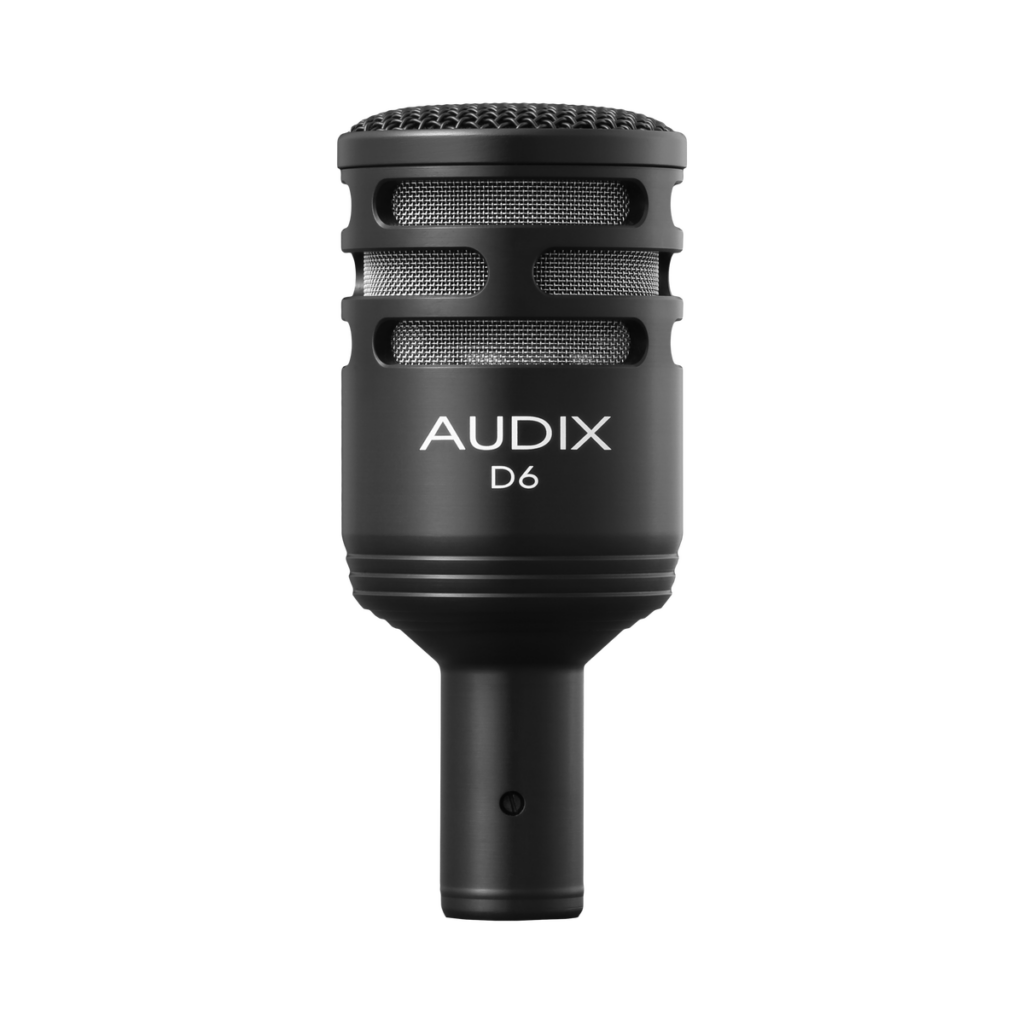
In my opinion, the Audix D6 represents the single most significant advancement in kick drum microphones during my recording career.
That’s a pretty substantial statement, considering how many microphones I’ve used over the years. But I think it’s justified.
Before the D6 came along, getting the kick drum sound you wanted generally involved finding the right microphone, experimenting with placement, applying equalization, and frequently using compression to get the attack and low-frequency response under control.
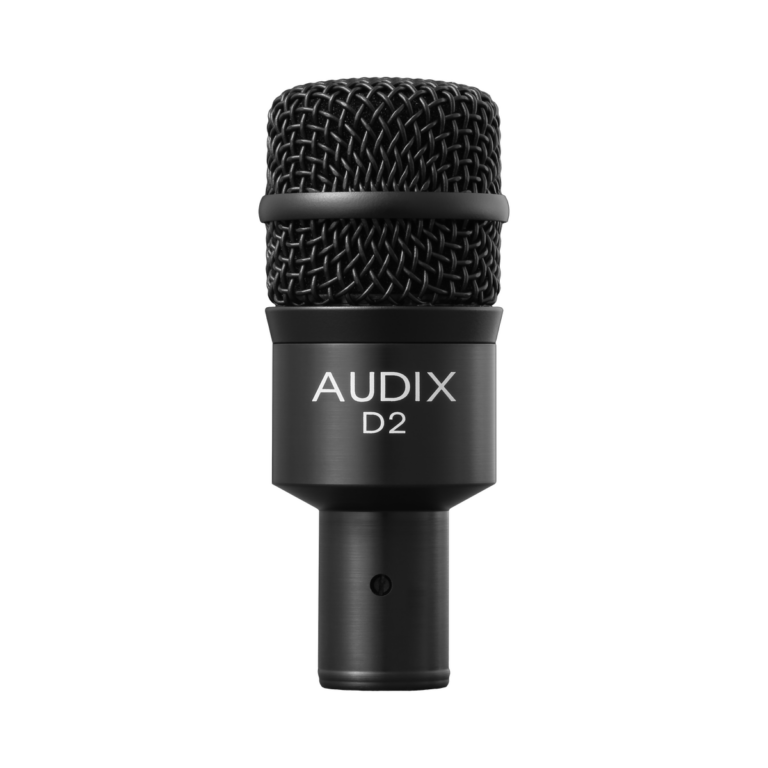
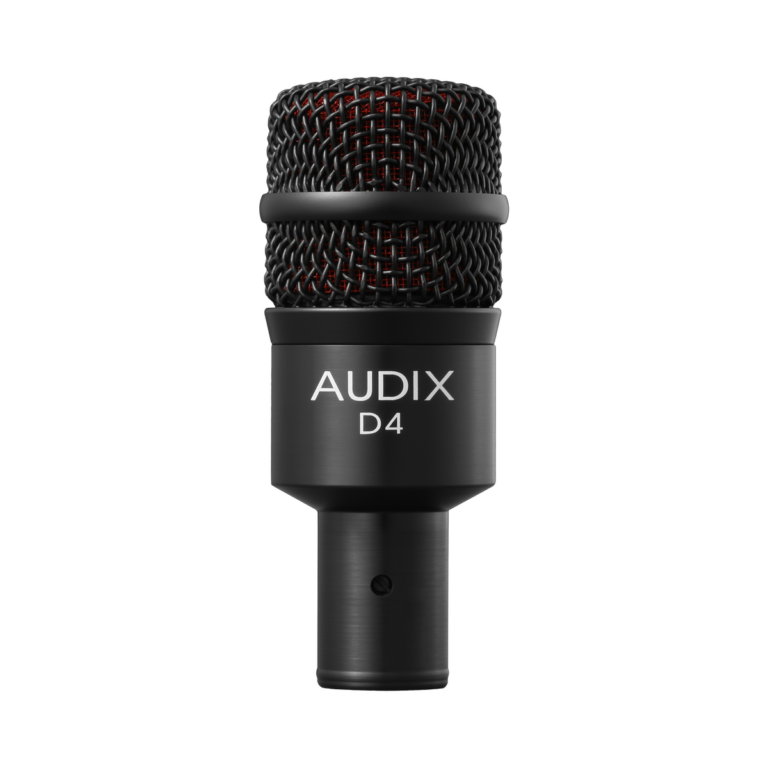
The D6 changed that equation considerably. For other drums, I’ve also reviewed the Audix D4 and Audix D2.
Before the D6
As I’ve mentioned in my review of the Audio-Technica ATM25, that was the first serious kick drum microphone I owned.
The ATM25 was a good microphone, and I used it for quite a while. Eventually, I acquired a vintage AKG D12E, followed by a second vintage D12E that sounded even better.
I still have that second one today.
The D12E was a wonderful microphone, with a big, natural low-frequency response and a character that worked particularly well on bass drums. But it didn’t necessarily provide the kind of attack that became increasingly desirable in modern recordings.
And then there was the AKG D112.
I never liked that microphone.
To me, the D112 always sounded like somebody bouncing a basketball.
There was something about its particular combination of attack and resonance that I found thoroughly unappealing. I know plenty of engineers used them successfully, and I’m sure there are people who love the D112.
I’m not one of them.
So when the Audix D6 appeared, it was something of a revelation.
The Sound We’d Been Looking For
The remarkable thing about the D6 was that it seemed to deliver exactly the combination of characteristics that engineers had been trying to achieve for years.
It had that nice, pronounced click at the front of the kick drum sound.
But it also had a terrific low-frequency rumble.
And those two characteristics worked together beautifully.
You didn’t have to sacrifice the bottom end to get the attack, or sacrifice the attack to get a substantial low-frequency foundation.
The D6 provided both.
Now, it’s important to understand that the D6 isn’t intended to be an entirely neutral microphone. Its frequency response is deliberately shaped to emphasize the characteristics that make a kick drum sound good in a contemporary recording.
And that’s precisely why it works so well.
Some microphones are designed to capture a source as accurately as possible. Others are designed to give you a particular sound.
The D6 is very much in the latter category.
But what a useful sound it is.
Excellent Transient Response
Another thing that impressed me about the D6 was its transient response.
The attack was so well defined that, in many situations, I found myself needing considerably less compression than I would have used with other kick drum microphones.
That’s not to say the D6 replaces a compressor.
Compression serves several purposes, including controlling dynamics, shaping the envelope, and helping the kick drum sit properly in a mix.
But the D6 already delivers such a well-developed attack that you don’t necessarily need to use compression simply to manufacture the punch you’re looking for.
And that’s a significant advantage.
I’ve always preferred to get as much of the sound as possible from the microphone itself, rather than relying on extensive processing afterward.
The D6 makes that remarkably easy.
A Sensible, Well-Made Microphone
Beyond its sound, there are several other things I appreciate about the D6.
First, it’s reasonably sized.
That may not sound particularly important until you’ve spent time trying to position some of the larger kick drum microphones inside a bass drum or near a port.
The D6 is compact enough to be practical without feeling flimsy.
Second, it’s reasonably priced.
Considering its performance, I think it’s always represented excellent value.
And third, it’s made in the United States.
Audix deserves credit for producing a professional microphone that’s well engineered, well manufactured, and doesn’t require an absurd investment.
It’s a straightforward, durable piece of equipment that does exactly what it’s supposed to do.
If It Isn’t Broken, Don’t Fix It
I still own two original Audix D6 microphones.
And one of the things I find particularly satisfying is that when I listen to a current-production D6, it sounds essentially the same as my originals.
That’s a very good thing.
There seems to be a tendency among manufacturers to continually revise products, sometimes improving them, but sometimes changing things that didn’t need changing in the first place.
The D6 didn’t need changing.
Audix got it right.
And I’m glad they’ve resisted the temptation to reinvent it.
I hope they never change the basic D6.
There is, of course, the newer D6X, which adds selectable tone-shaping capabilities.
That’s an interesting idea, and I’d certainly like to hear one.
Having different tonal options available directly on the microphone could be useful, particularly for engineers who want to adapt the sound to different drums or musical styles.
But I haven’t evaluated the D6X yet, so I won’t speculate about how it compares.
What I can say is that the original D6 remains an exceptionally good microphone.
What About Bass Cabinets?
I’ve also had some success using the D6 on bass guitar cabinets.
Its substantial low-frequency response and defined attack can produce some interesting results, particularly when you’re looking for a more aggressive bass sound.
But I wouldn’t consider it my first choice for that application.
There are other microphones I prefer on bass cabinets, depending on the amplifier, speaker, and sound I’m trying to capture.
For me, the D6’s real strength remains the kick drum.
And that’s where it excels.
The Verdict
The Audix D6 is one of those rare products that genuinely changed the way I approached recording an instrument.
It delivered the combination of low-frequency weight, pronounced attack, and excellent transient response that I’d spent years trying to achieve with other microphones and processing.
It’s compact, reasonably priced, beautifully made in the United States, and remarkably consistent from the original production versions to the microphones being manufactured today.
I still have my vintage AKG D12E, and I still appreciate what that microphone can do.
But when I want a great kick drum sound without a lot of fuss, the D6 is the microphone I reach for.
In my opinion, it’s the modern standard against which other kick drum microphones should be judged.
And after all these years, I haven’t heard anything that makes me want to replace it.
Highly recommended.